
Last updated October 17, 2026
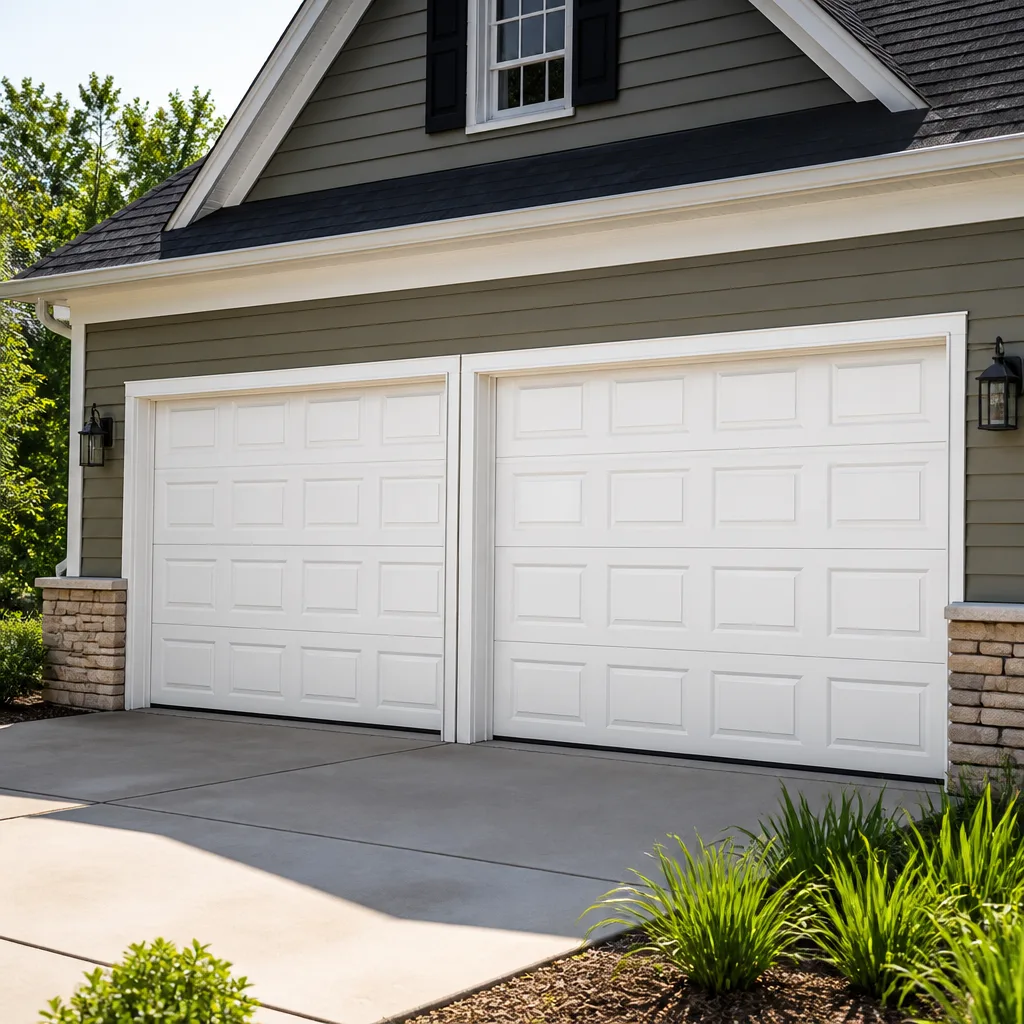 Raised-panel steel
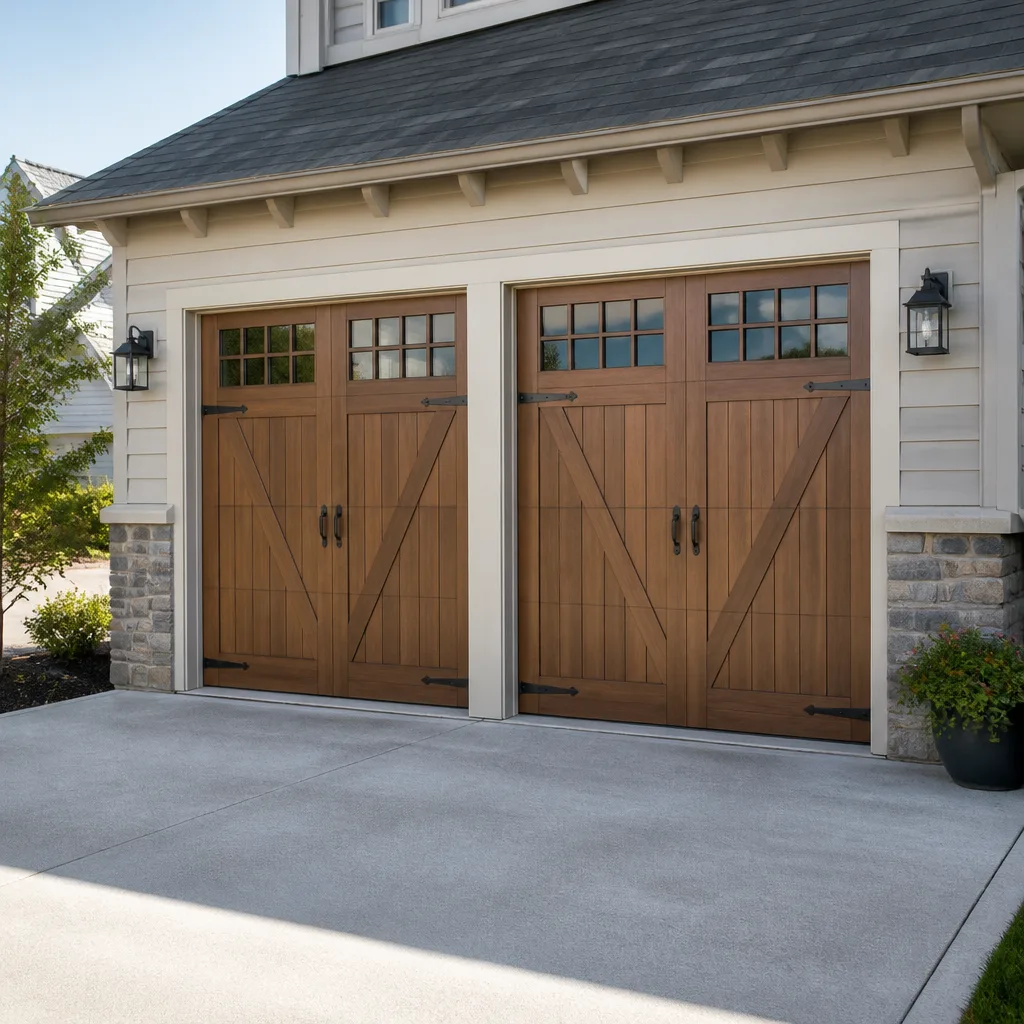 Carriage house
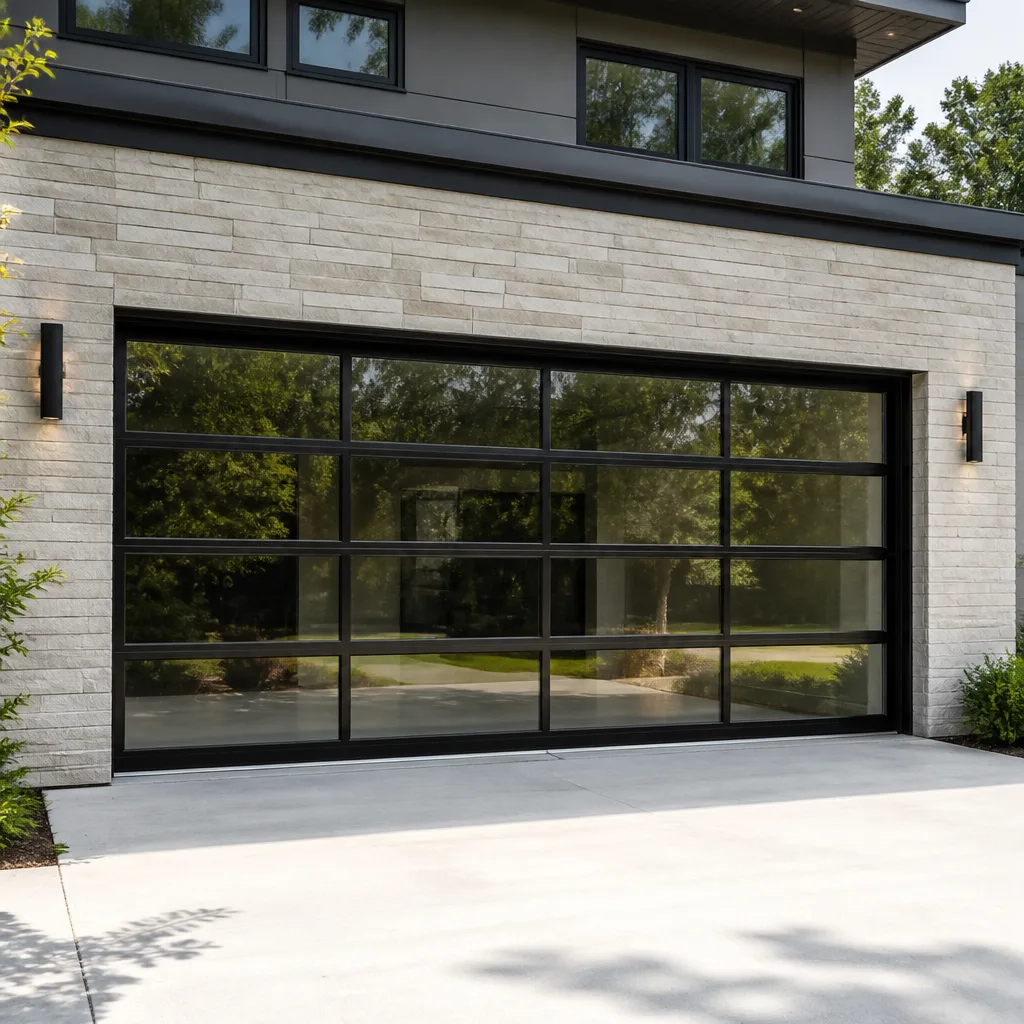 Full-view glass
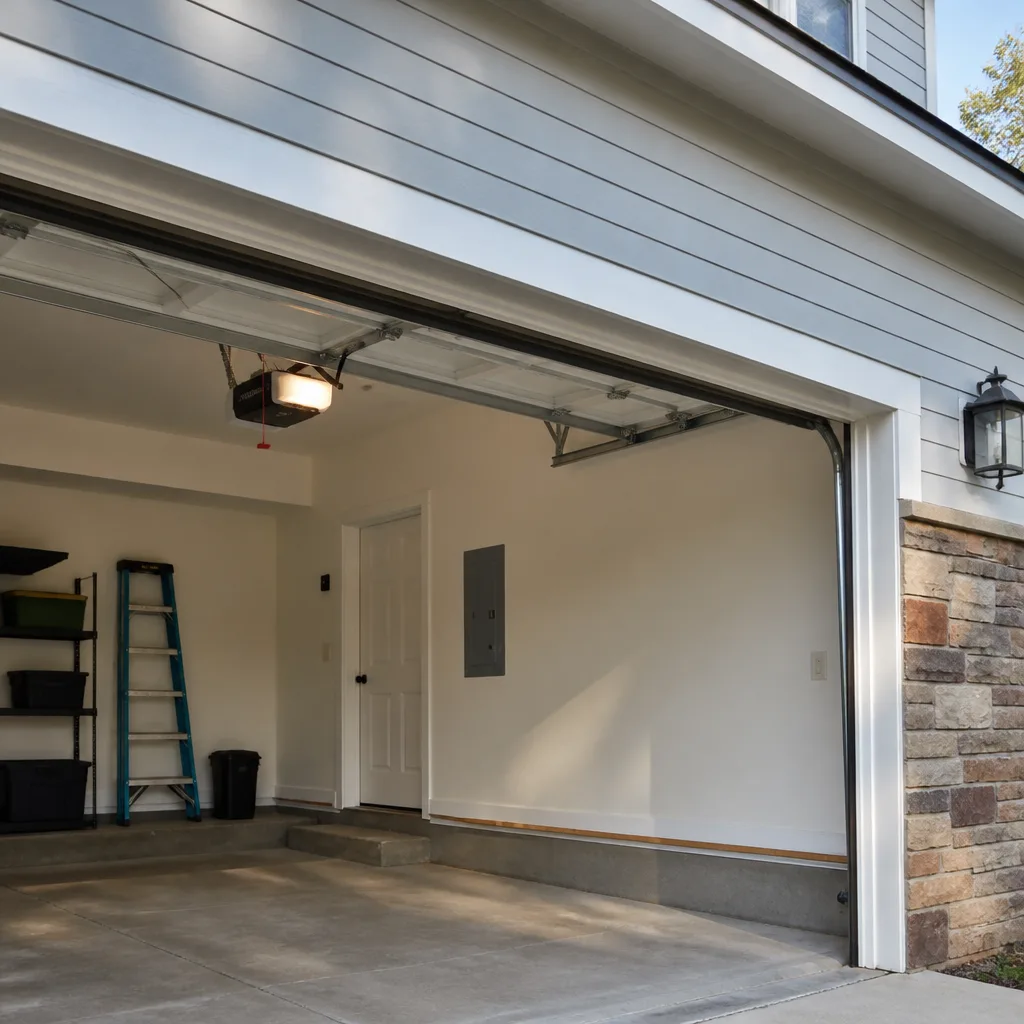 LiftMaster openers
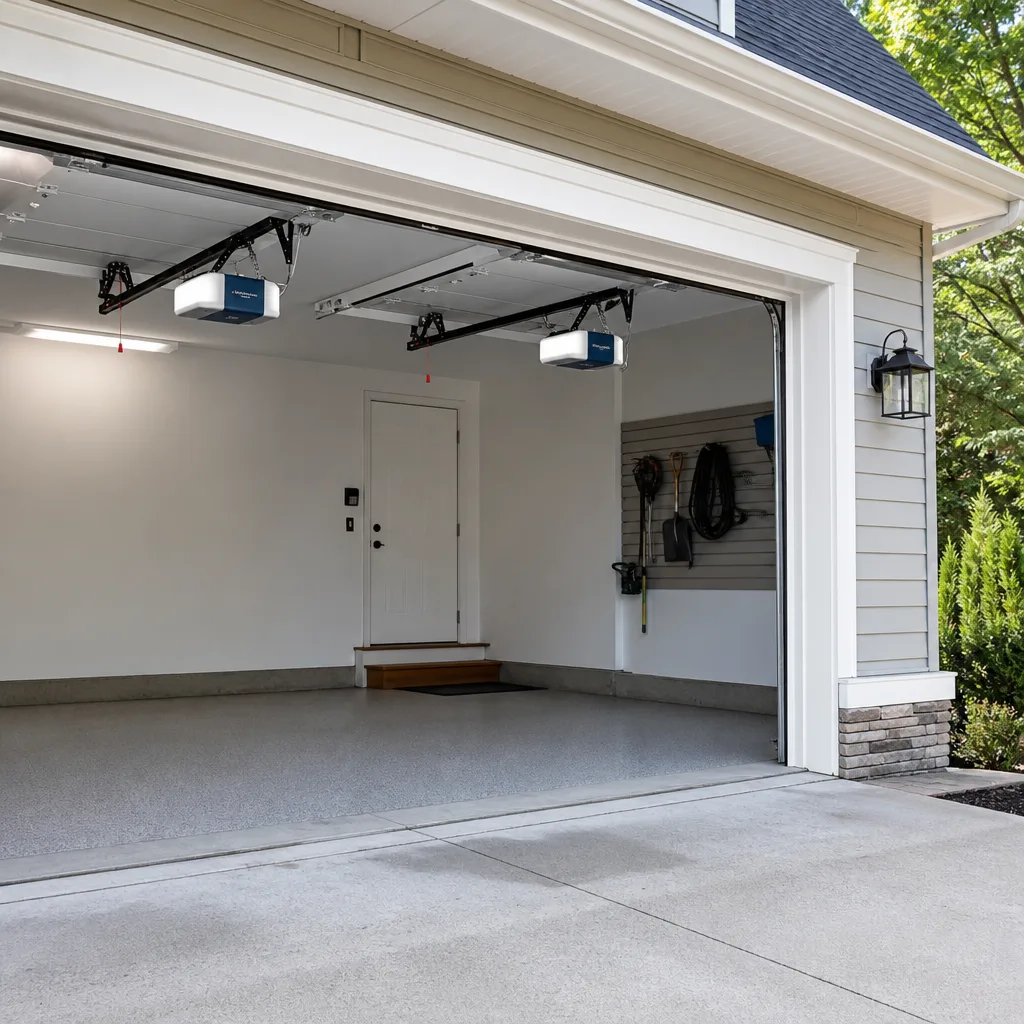 Chamberlain openers
Full 25-point door and opener safety check with every visit - springs, cables, rollers, tracks, and your LiftMaster or Chamberlain opener included
You get a price before we start. It does not change when the truck arrives.
Get your free estimateSeasonal Garage Door Care for Riverside: Year-Round Homeowner’s Guide
Riverside averages 277 sunny days a year. That’s more than enough UV exposure to oxidize an unprotected steel door finish and dry out rubber seals to the point of cracking within three years, a timeline most maintenance guides written for national audiences never account for. But sun isn’t the only stressor. Riverside has four distinct garage door stress periods: peak UV in summer, Santa Ana wind events in fall, brief cold snaps in winter, and pollen-and-dust accumulation in spring. Each one asks something slightly different of the door and its hardware, and this guide explains exactly what to do, when to do it, and what to leave to a trained technician.
Styles & brands we work with
Quick Answer
Seasonal garage door care in Riverside CA means four targeted checkups per year: spring cleaning of tracks and sensors to clear pollen and dust, summer application of UV protectant to steel doors and lubrication of seals, fall inspection of track alignment after Santa Ana wind events, and winter observation of spring tension during cold snaps when temperatures drop into the low 40s. Most tasks take under 20 minutes, but spring adjustment and any work involving cables or tracks under tension should be handled by a licensed technician.
Table of Contents
- Why Riverside’s Climate Punishes Garage Doors Differently
- Spring: Pollen, Dust, and Track Clarity
- Summer: UV Protection and Seal Care
- Fall: Santa Ana Winds and Alignment
- Winter: Cold Snaps and Spring Tension
- A Month-by-Month Riverside Garage Door Calendar
- Common Mistakes to Avoid
- When to Call a Professional
- Frequently Asked Questions
- The Bottom Line
Why Riverside’s Climate Punishes Garage Doors Differently
Most garage door maintenance advice is written for places with snow, ice, and heavy rain. Riverside doesn’t have those. What it has is relentless sun, dry air, occasional powerful winds, and temperature swings that most guides never address. That means the standard “lubricate in fall and spring” advice misses the actual failure points for Inland Empire doors.
We’ve worked on garage doors in Riverside since 2002, and the patterns are consistent. The top three seasonal failures we see are cracked bottom seals from summer heat transfer through concrete slabs, misaligned tracks from Santa Ana wind debris, and sluggish spring response during winter cold snaps when steel contracts and tension shifts. None of these appear in generic maintenance lists, but they account for most of the seasonal repair calls we receive in neighborhoods like Canyon Crest, Wood Streets, and La Sierra.
Understanding these local stress points is the difference between a door that lasts 8 years and one that lasts 15 or more. The good news: each seasonal issue has a simple, observable warning sign, and most of them can be caught before they become a repair bill.
Spring: Pollen, Dust, and Track Clarity
Riverside springs bring heavy pollen from oak, sycamore, and citrus trees, plus fine dust blown in from the Santa Ana River basin. This combination settles into garage door tracks, clings to lubricated rollers, and coats photo-eye sensors. The result is a door that moves slower, jerks slightly, or occasionally reverses for no apparent reason.
What happens: Pollen mixes with existing roller grease to form a gritty paste. Dust builds up on the safety sensor lenses at the bottom of each track. Left unaddressed, the door’s motor works harder to move the same weight, and the safety reverse may trigger falsely because the sensor can’t see the beam clearly.
What to do in spring:
- Wipe the photo-eye lenses on both sides with a dry microfiber cloth. Do this once in March and again in May during peak pollen.
- Vacuum or wipe the inner track channels with a dry rag to remove dust buildup. Don’t apply lubricant to tracks; they’re designed to run dry.
- Check the rubber bottom seal for cracks caused by winter temperature swings. If it’s brittle or split, it should be replaced before summer heat makes it worse.
- Observe the door’s movement through one full open-and-close cycle. A slight hesitation at one point often means a roller is binding in a dirty track.
Spring is also the right time to test the balance. Disconnect the opener (pull the red release handle) and lift the door manually to waist height. It should stay put. If it drops or rises on its own, the springs are wearing and need attention. This is a safe test for any homeowner, but spring replacement itself is not a DIY job. If the test fails, call us at (559) 254-0605 for an assessment. Our technicians carry springs for Clopay, Amarr, Wayne Dalton, and Raynor doors on the truck, and the written price is presented before any work begins.
Summer: UV Protection and Seal Care
Riverside summer temperatures routinely exceed 100°F, and the garage door is often the largest unshaded surface on the home. Steel doors facing west or south absorb heat all afternoon, and that heat radiates downward into the bottom seal, which sits pressed against a concrete slab that has also been baking all day. Two materials expanding and contracting at different rates is a recipe for seal deformation.
What happens to the door finish: UV radiation breaks down the clear coat and paint binder on steel doors. You’ll see it first as a chalky white residue when you rub your hand across the surface. That’s oxidation, and once it starts, the underlying steel is vulnerable to corrosion. A door that gets this treatment every year can look faded and streaked within three to five years.
What to do in summer:
- Apply a UV-protective automotive sealant or polymer wax to the exterior of a steel door in early June and again in early August. This is the single highest-return maintenance task for Riverside doors. Use a product designed for painted metal, not one meant for vinyl or wood.
- Inspect the bottom seal for flattening or sticking. If the rubber feels tacky or leaves marks on the driveway, it’s beginning to deform. A new seal costs less than most homeowners expect, and replacing it in summer prevents winter drafts and pest entry.
- Lubricate hinges, rollers, and the lock mechanism with a silicone-based spray. Avoid WD-40 for this; it displaces moisture but leaves little lasting lubrication. A dry Teflon or white lithium spray is better for metal-on-metal contact points.
- If your garage faces west in neighborhoods like Arlington Heights or Mission Grove, consider a lighter door color when it’s time for replacement. Lighter finishes absorb measurably less solar heat.
One warning about summer garage heat: if you store paint, propane, or household chemicals in the garage, check the temperature inside during an August heat wave. A west-facing door can push interior temperatures past 120°F, which exceeds the safe storage range for many products. That’s a garage organization issue, but the door’s thermal performance is a contributing factor. An insulated door, properly installed, moderates that temperature swing substantially.
Fall: Santa Ana Winds and Alignment
Santa Ana wind events are Riverside’s most underrated garage door threat. The winds blow dry, desert air through the mountain passes at 40 to 60 mph, picking up sand, twigs, leaves, and whatever else is loose. That debris gets driven into the gap between the track and the wall, and it doesn’t fall back out on its own.
What happens: Sand and small debris embed themselves in the roller tracks. Over time, rollers hit these obstructions and either skip or wear unevenly. The door starts to wobble slightly, produces a grinding sound, or hangs up at one specific point during travel. Worse, sustained wind pressure against a partially open door can flex the horizontal track enough to throw it out of alignment with the vertical track.
What to do in fall:
- After the first significant Santa Ana event (usually October or November), run the door through a full cycle and listen for grinding or squeaking. A clean door is nearly silent; a gritty one announces itself.
- Inspect the point where the curved horizontal track meets the vertical track on both sides. There should be no visible gap or misalignment. If you can see daylight between the roller and track at any point, something has shifted.
- Clear leaves and debris from around the bottom seal and the exterior track area. Palm fronds are a particular problem in Riverside’s older neighborhoods with mature landscaping.
- Check that all track mounting brackets are still tight against the wall. Loose brackets allow the track to flex under wind load, which accelerates misalignment.
Track realignment is not a job for improvisation. The tracks carry the door’s full weight, and incorrect alignment puts stress on the springs and cables. If you notice any of the signs above, we recommend calling a professional rather than attempting an adjustment with hand tools. Fernbrook Garage Doors Riverside has been serving Riverside homes through Santa Ana seasons since 2002, and our techs know exactly what wind-driven debris does to local track setups. A garage door repair in Riverside call for track alignment is typically a quick visit, and the written price is agreed before any work starts.
Winter: Cold Snaps and Spring Tension
Riverside winter nights drop into the low 40s, occasionally the high 30s. That’s not extreme by national standards, but it’s enough to change how torsion springs behave. Steel contracts when it cools, and a spring that was calibrated in 80-degree weather has slightly different tension characteristics at 40 degrees.
What happens: Torsion springs store energy by twisting. Cold steel is stiffer, which slightly increases the effective tension. On a properly installed and balanced door, this change is negligible. On a door with a spring that’s already lost some temper, the cold snap makes the imbalance obvious. The door may feel heavier on manual operation, the opener may strain, or the door may not stay in place when disconnected.
What a homeowner can safely observe:
- Run the door through a full cycle on a cold morning (below 45°F) and again in the afternoon when it’s warmer. A noticeable difference in speed or smoothness between the two runs suggests the spring is temperature-sensitive in a way that indicates wear.
- Visual inspection only: look at the spring above the door. If you see a visible gap in the coil (a break), do not operate the door. Call us immediately. A broken torsion spring under tension is dangerous to be around, and the door should not be moved until a professional has assessed it.
- Listen for a “twang” sound during operation. That’s the spring coils shifting under load, and on older springs it’s an early warning sign.
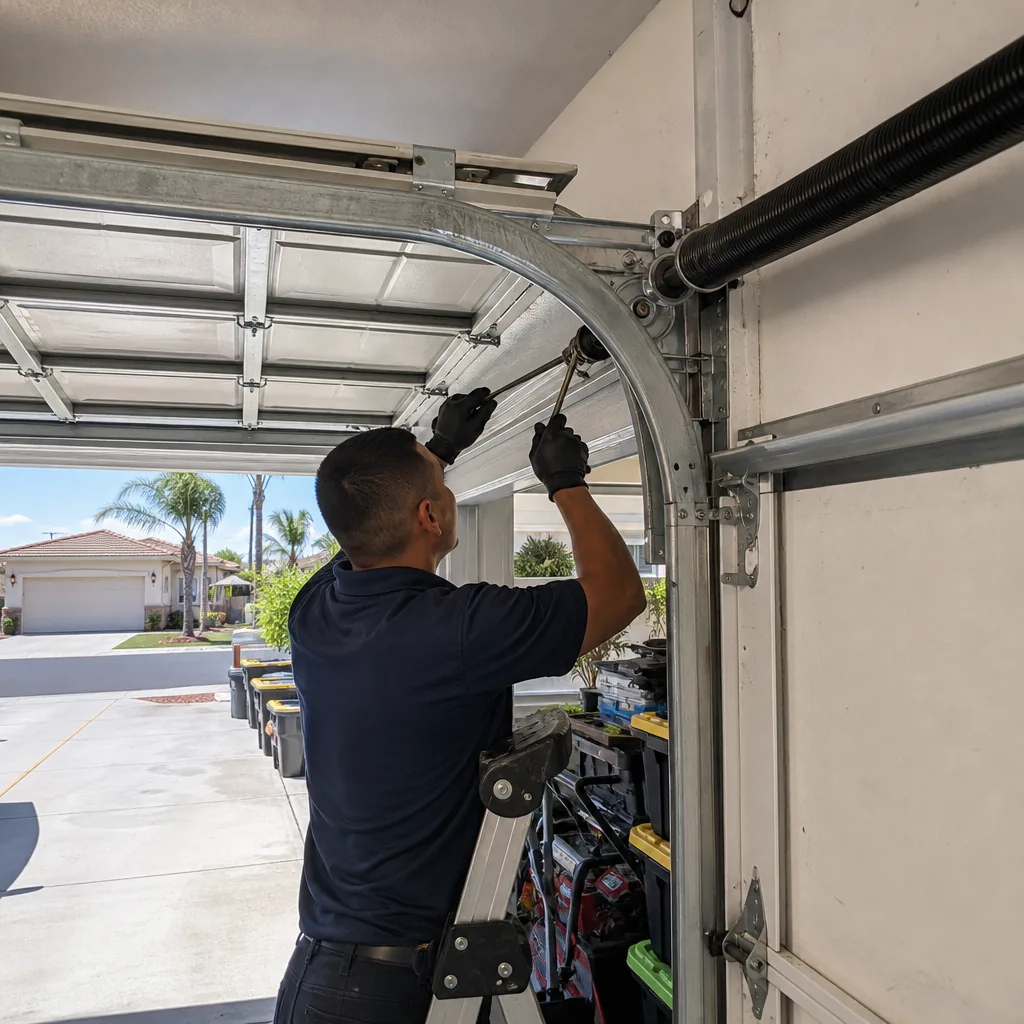
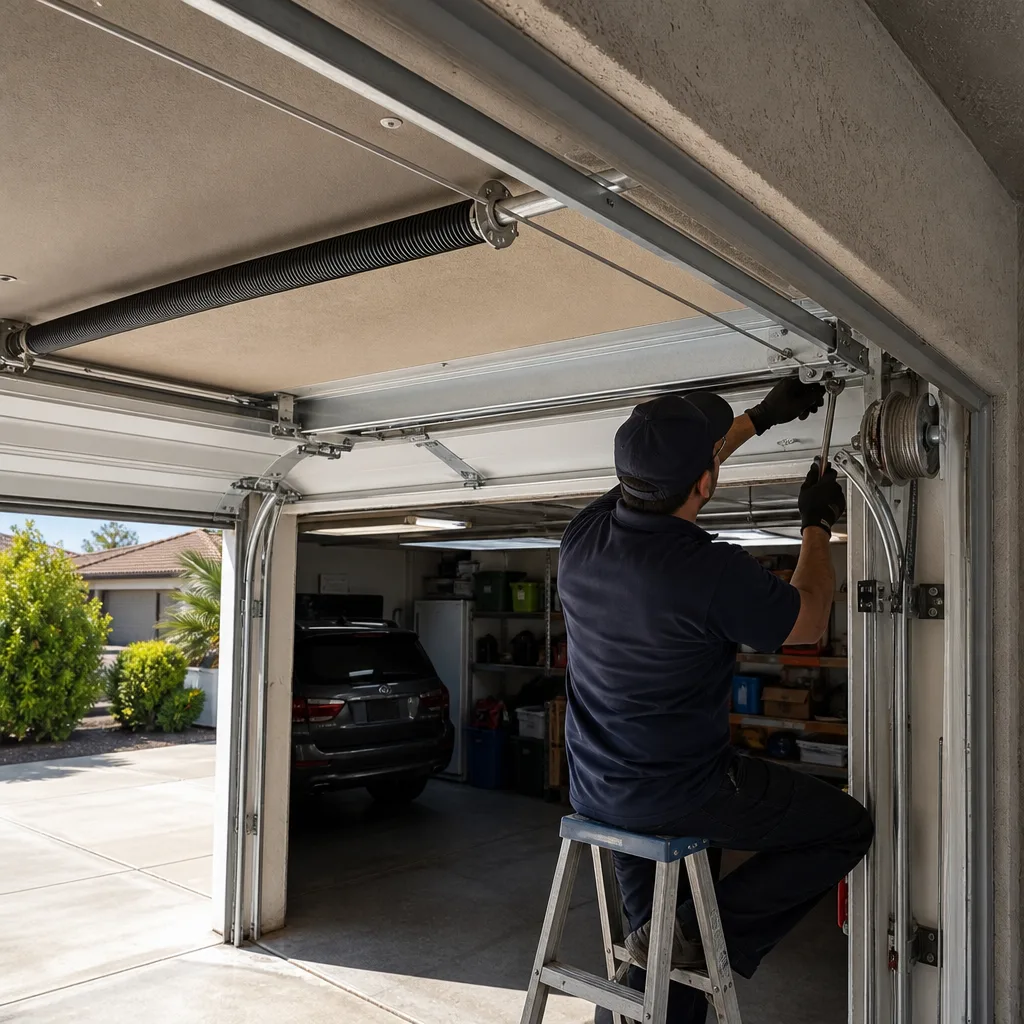
What you should not do: attempt to adjust, replace, or even touch a torsion spring. These springs are under high tension, and the tools and technique required to work on them safely are not something a weekend handyman can improvise. This is one of the few areas where we will be blunt: a torsion spring failure is a serious injury risk. Our garage door spring repair in Riverside service exists specifically because this component demands trained handling. Jesse Calder, owner at Fernbrook, can tell you stories from two decades of work about doors that were “fixed” by a homeowner and failed catastrophically within weeks.
Winter is also the season when we see the most requests for opener replacement. Cold weather stresses an aging opener motor, and the extra effort required to move a stiff door pushes borderline openers over the edge. If your opener is more than 12 years old and struggles on cold mornings, consider replacement before it fails entirely. Our technicians are trained on LiftMaster, Chamberlain, Genie, and Craftsman openers, and a garage door installation in Riverside includes calibration for Riverside’s seasonal temperature range.
A Month-by-Month Riverside Garage Door Calendar
Here is the full year, mapped to the actual conditions in Riverside each month. Print it, save it, or just remember the four anchor months: March, June, October, and December.
- January: Cold month. Observe door operation on the coldest mornings. Listen for spring noise. No action needed if the door runs smoothly.
- February: Test the balance (disconnect opener, lift door to waist height, it should stay). This catches winter spring wear before spring growth season.
- March: Clean photo-eye sensors. Pollen season begins. Wipe track channels with a dry cloth. Check bottom seal for winter cracks.
- April: Apply silicone lubricant to hinges, rollers, and locks. Use pet-safe products if you have animals in the garage; standard silicone sprays are fine, but read the label before spraying near food or pet areas.
- May: Second sensor cleaning. Pollen peaks in Riverside during May. Clear any accumulated dust from around the opener motor housing.
- June: First UV protectant application to steel door exterior. Inspect bottom seal for summer flattening. Check interior garage temperature on a hot afternoon.
- July: Check for heat-related seal sticking. If the door feels like it’s “peeling” off the concrete when it opens, the seal is deforming and should be replaced. Do not wait for winter.
- August: Second UV protectant application. Peak heat month in Riverside. Also a good time to check opener force settings; if the opener reverses frequently, the heat may be affecting sensor alignment.
- September: Pre-Santa Ana inspection. Confirm all track brackets are tight. Clear any accumulated debris from around the door exterior. Palm fronds and dry leaves collect in September.
- October: Post-first-wind-event track inspection. Listen for grit, look for misalignment. This is the single most important fall maintenance task for Riverside doors.
- November: Lubricate all moving parts before the colder weather sets in. Check that weatherstripping around the door perimeter is still flexible and making contact.
- December: Cold-snap observation. Test the door on the coldest morning of the month. Any change in operation from the afternoon run indicates a spring or opener issue worth addressing.
Common Mistakes to Avoid
- Lubricating the tracks. Garage door tracks are designed to run dry. Adding grease or spray to the track channel attracts dust, which creates the exact grinding paste that causes roller wear. Lubricate the rollers, hinges, and springs, never the track itself.
- Ignoring a door that’s “a little slow.” In Riverside, slow operation is usually a symptom of something specific: dirty tracks in spring, spring wear in winter, or heat-related seal drag in summer. None of these resolve on their own. Each gets more expensive the longer it waits.
- Using WD-40 for everything. WD-40 is a solvent and water displacer, not a long-term lubricant. Use a silicone spray or white lithium grease for moving metal parts. Your rollers will thank you.
- Waiting until a seal is visibly cracked to replace it. By the time a bottom seal shows visible cracking, it has been underperforming for at least a season. Riverside’s dry heat means the rubber loses flexibility long before it splits. Check for brittleness in spring, not for cracks in fall.
- Forgetting the photo-eye sensors entirely. These small lenses on either side of the door opening are the most commonly neglected component. In Riverside’s dusty conditions, they need cleaning at least twice a year. A dirty sensor is the cause of most “my door reverses for no reason” calls.
- Assuming a new door needs no maintenance. Even a brand-new Amarr or Wayne Dalton door needs the same seasonal attention from day one. The good news is that a maintained steel door in Riverside can last 15 to 20 years. An unmaintained one rarely makes it past 10.
When to Call a Professional
Some garage door tasks are genuinely safe for any homeowner with basic tools and a little patience. Sensor cleaning, track wiping, lubricant application, and visual inspections all fall into that category. Others are not. If your door has a broken spring, a visibly misaligned track, a cable that has come off the drum, or an opener that makes grinding noises, stop using the door and call us. Springs and cables are under high tension, and the energy stored in a torsion spring is enough to cause serious injury. That’s not a scare tactic; it’s the reality of the component. Fernbrook Garage Doors Riverside offers free estimates in Riverside, and a live person answers the phone 24 hours a day, 7 days a week. Call (559) 254-0605.
Frequently Asked Questions
Twice a year is sufficient for Riverside’s climate: once in April before summer heat and once in November before winter cold snaps. Use a silicone-based spray on hinges, rollers, springs, and the lock. Do not lubricate the track channels.
Yes. Direct UV exposure oxidizes steel door finishes and makes rubber seals brittle within a few years. West-facing and south-facing doors in neighborhoods like Canyon Crest take the worst of it. A UV-protective automotive sealant applied twice each summer significantly slows the damage. If your door is already heavily oxidized, a garage door repair in Riverside may include refinishing as an option, but replacement is sometimes more cost-effective.
The rubber bottom seal absorbs heat from both the sun-warmed door and the hot concrete slab beneath it, causing the rubber to soften and adhere slightly to the concrete. You’ll hear a “peeling” sound when the door opens. If this happens regularly, the seal has begun to deform and should be replaced. It’s an inexpensive fix, and Fernbrook carries seals for most major door brands.
Listen to the door run a full cycle and look for grit buildup or a slight wobble. Santa Ana winds drive sand and debris into track channels, which causes roller wear and gradual misalignment. If you hear grinding, wipe the tracks and check for visible track shift where the curved section meets the vertical section. If the track has visibly moved, don’t attempt to realign it yourself; the tracks carry the door’s full weight.
Wood doors are rare in Riverside’s newer developments but do exist in the Wood Streets historic district and some older Canyon Crest homes. Wood doors need the same UV protection considerations as steel doors, plus regular inspection for paint failure and moisture intrusion where the finish has cracked. The maintenance calendar above applies, but wood doors benefit from a third UV product application in early September. If you need a garage door installation in Riverside and are weighing wood against steel, consider sun exposure carefully; a west-facing wood door requires significantly more upkeep.
A steel door with regular seasonal maintenance typically lasts 15 to 20 years in Riverside. Without maintenance, the same door often needs replacement by the 10-year mark. The difference comes down to UV protectant application on the exterior, prompt seal replacement, and catching spring wear before it causes failure. Fernbrook has been maintaining and replacing doors in Riverside homes since 2002, and the ones that last the longest are the ones on our seasonal checklist.
The Bottom Line
Riverside garage doors don’t fail from snow, ice, or rain. They fail from sun, wind, dust, and temperature swings that most maintenance guides never mention. The fix is simple: four targeted checkups a year, each tied to a specific local condition. Clean sensors and tracks in spring, apply UV protectant and check seals in summer, inspect alignment after fall wind events, and observe spring behavior during winter cold snaps. Most of this is DIY-friendly and takes minutes. For everything involving springs, cables, or track realignment, call Fernbrook Garage Doors Riverside at (559) 254-0605. We’re happy to walk you through what you’re seeing over the phone, and if a visit is needed, the written price comes before any work begins.
Written by Jesse Calder, Owner at Fernbrook Garage Doors Riverside, serving Riverside since 2002.
See the difference
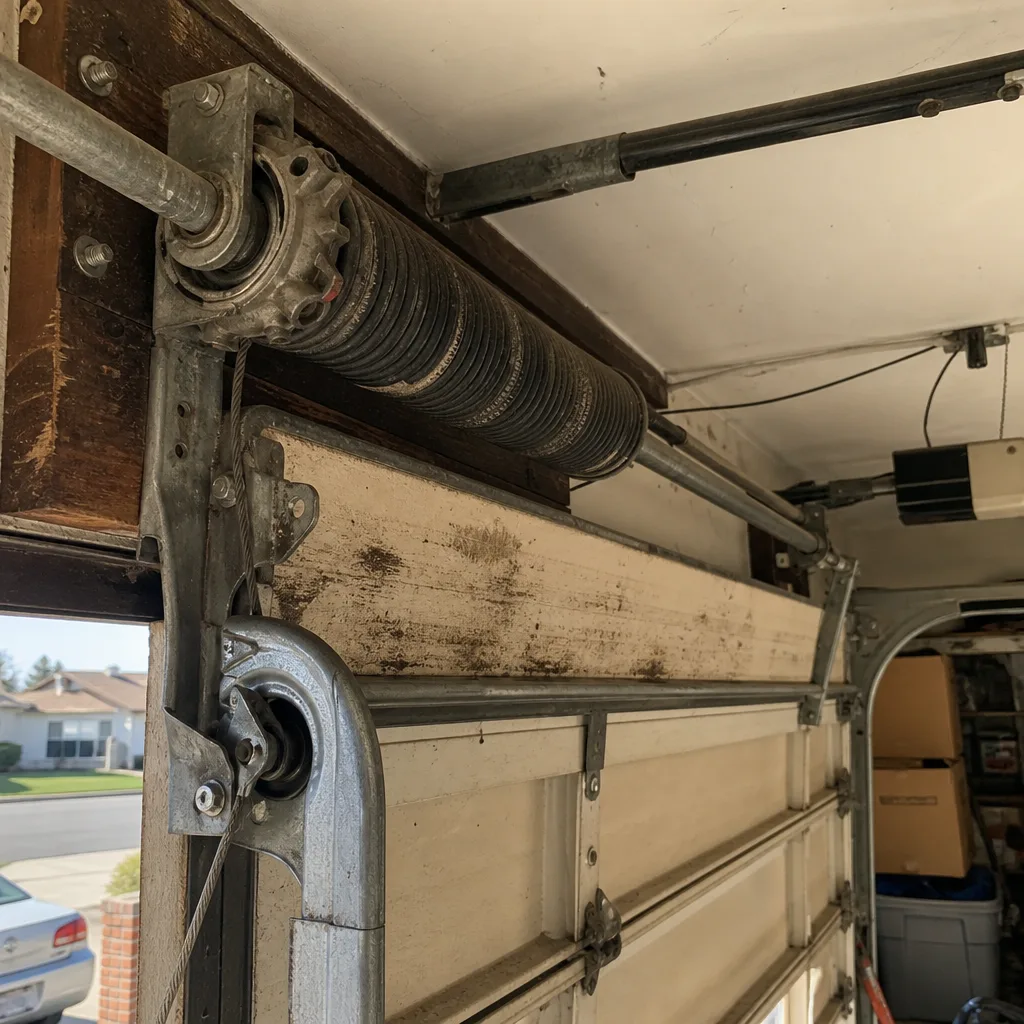 Before
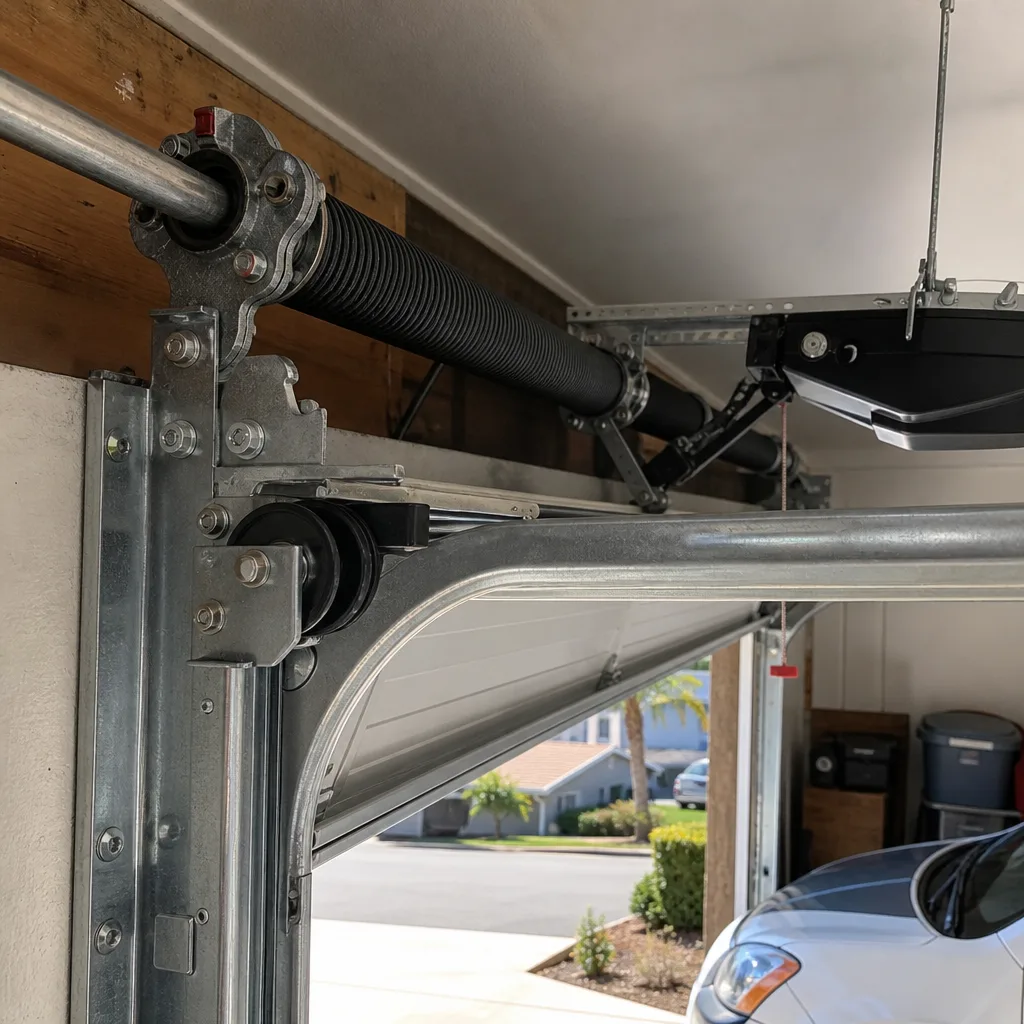 After
After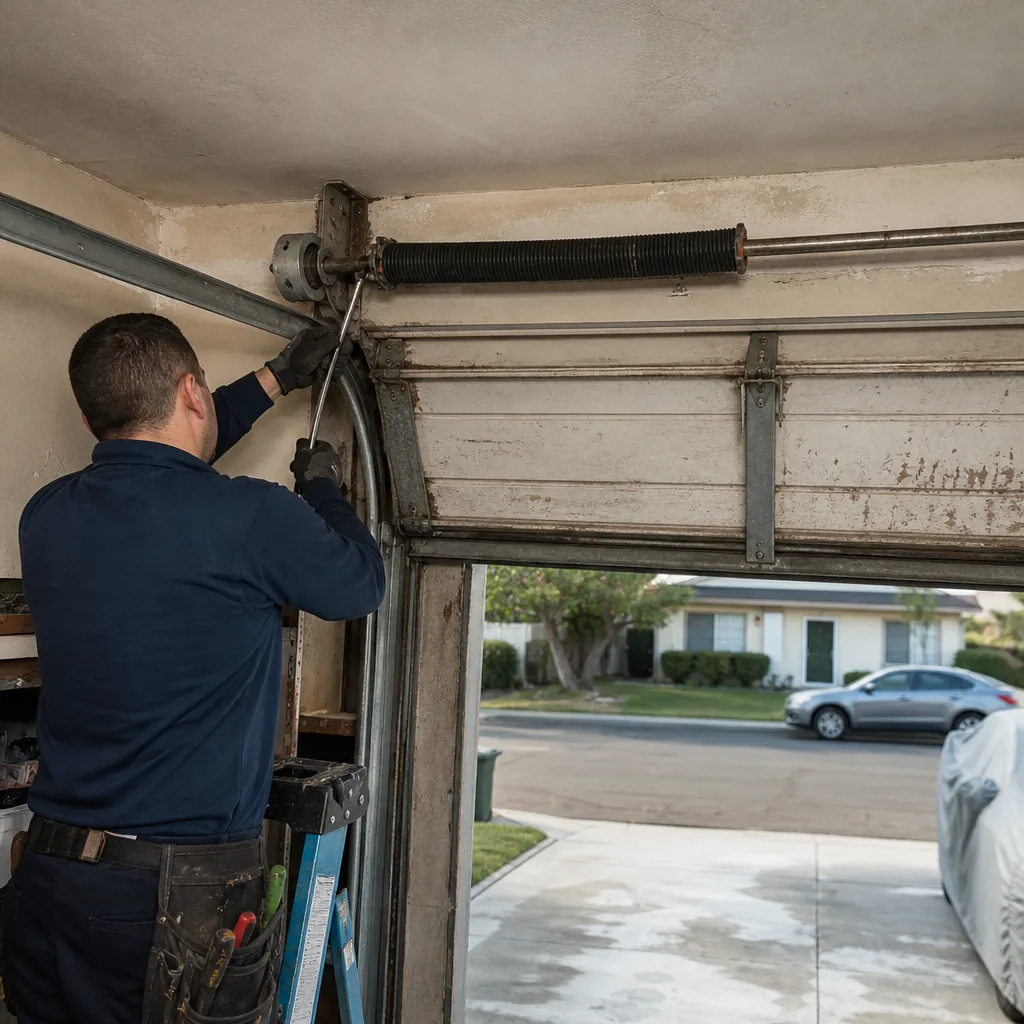 Before
 After
After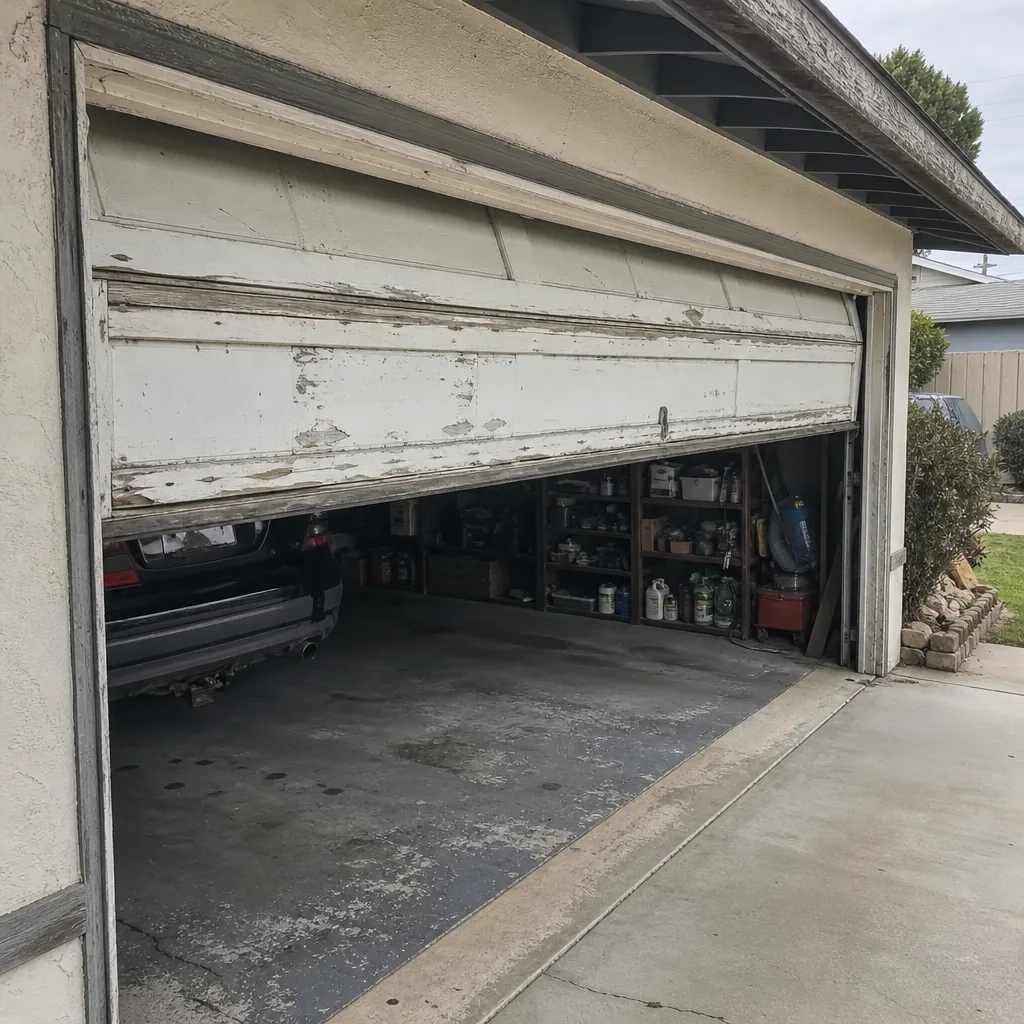 Before
 After
After