
Last updated October 17, 2026
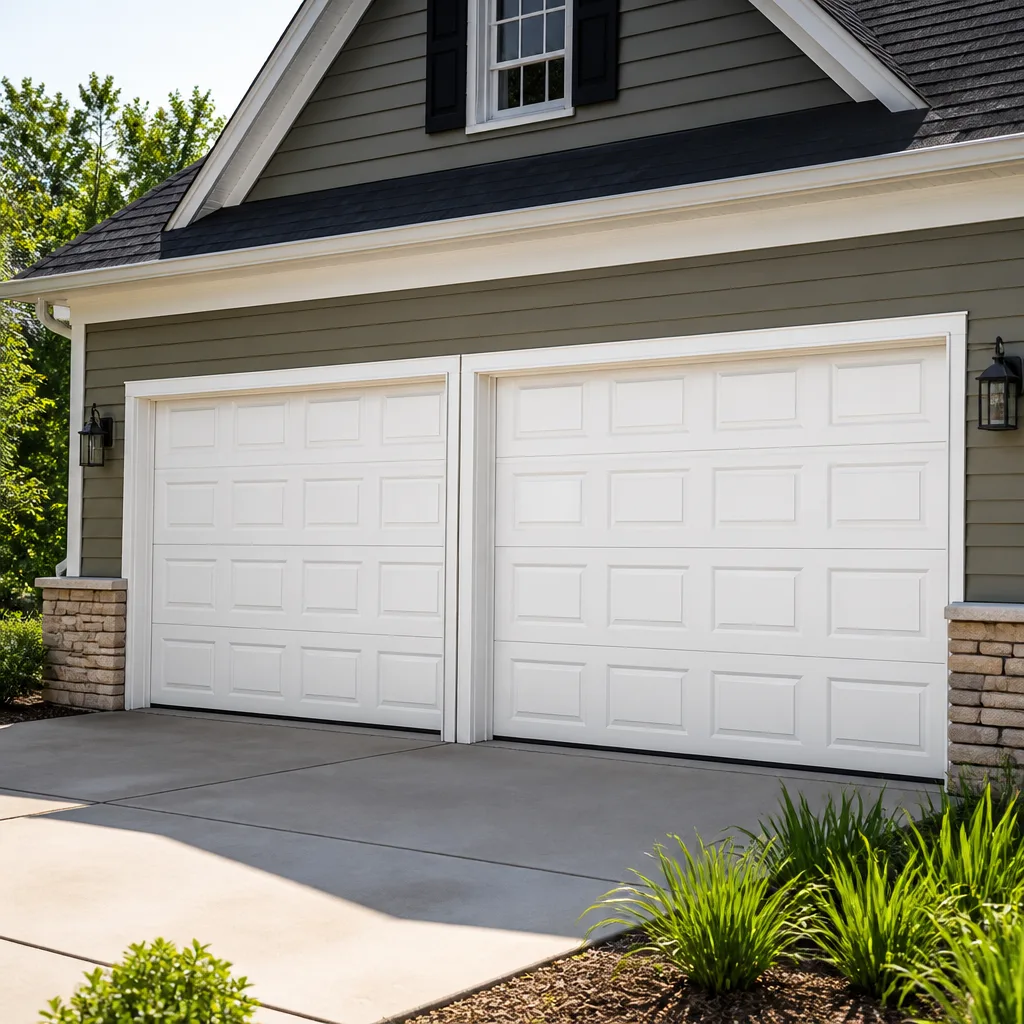 Raised-panel steel
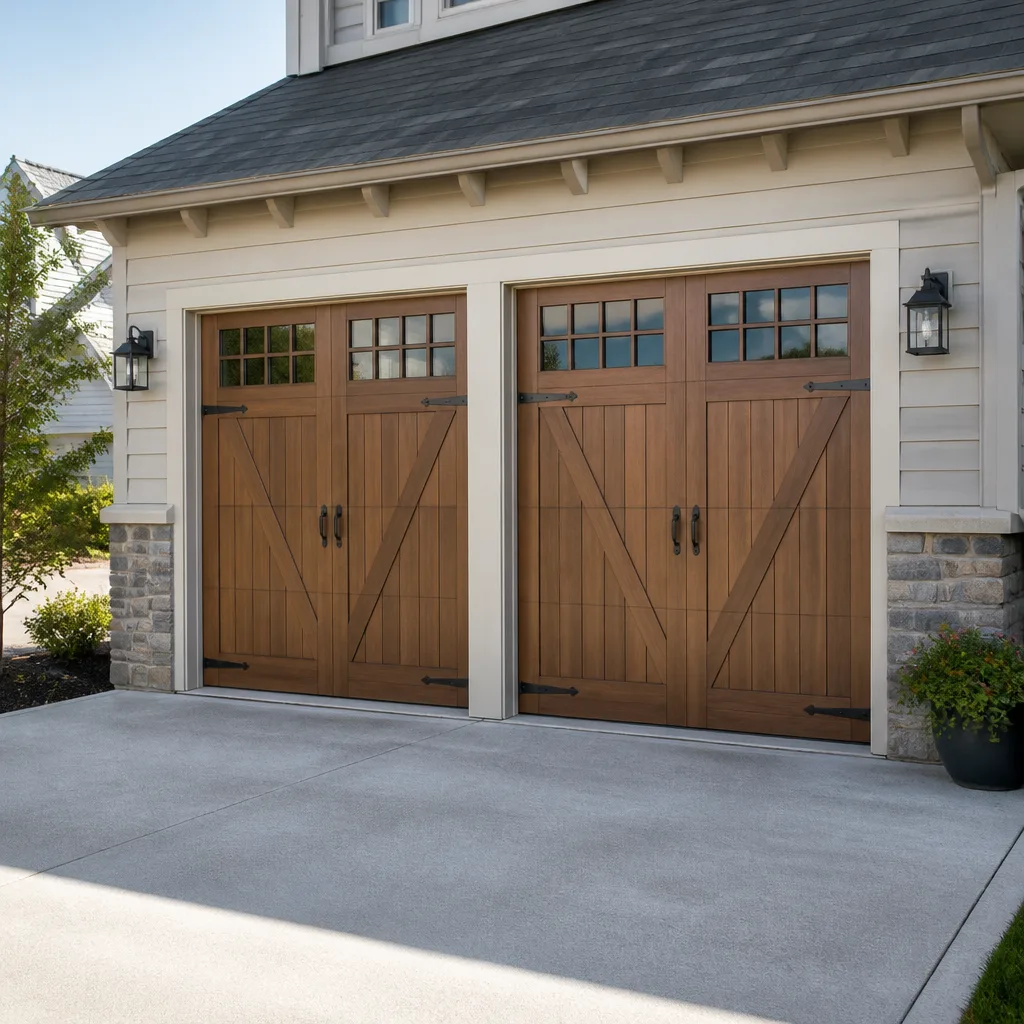 Carriage house
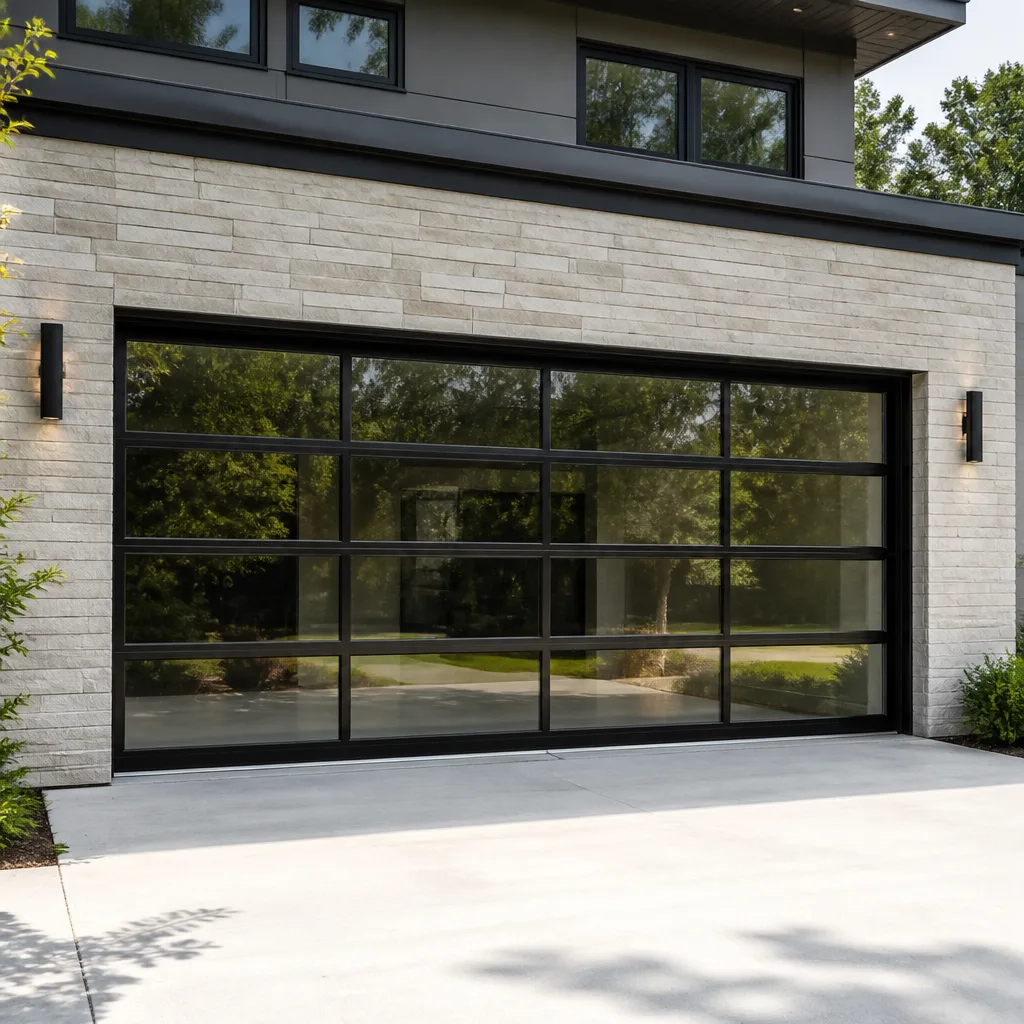 Full-view glass
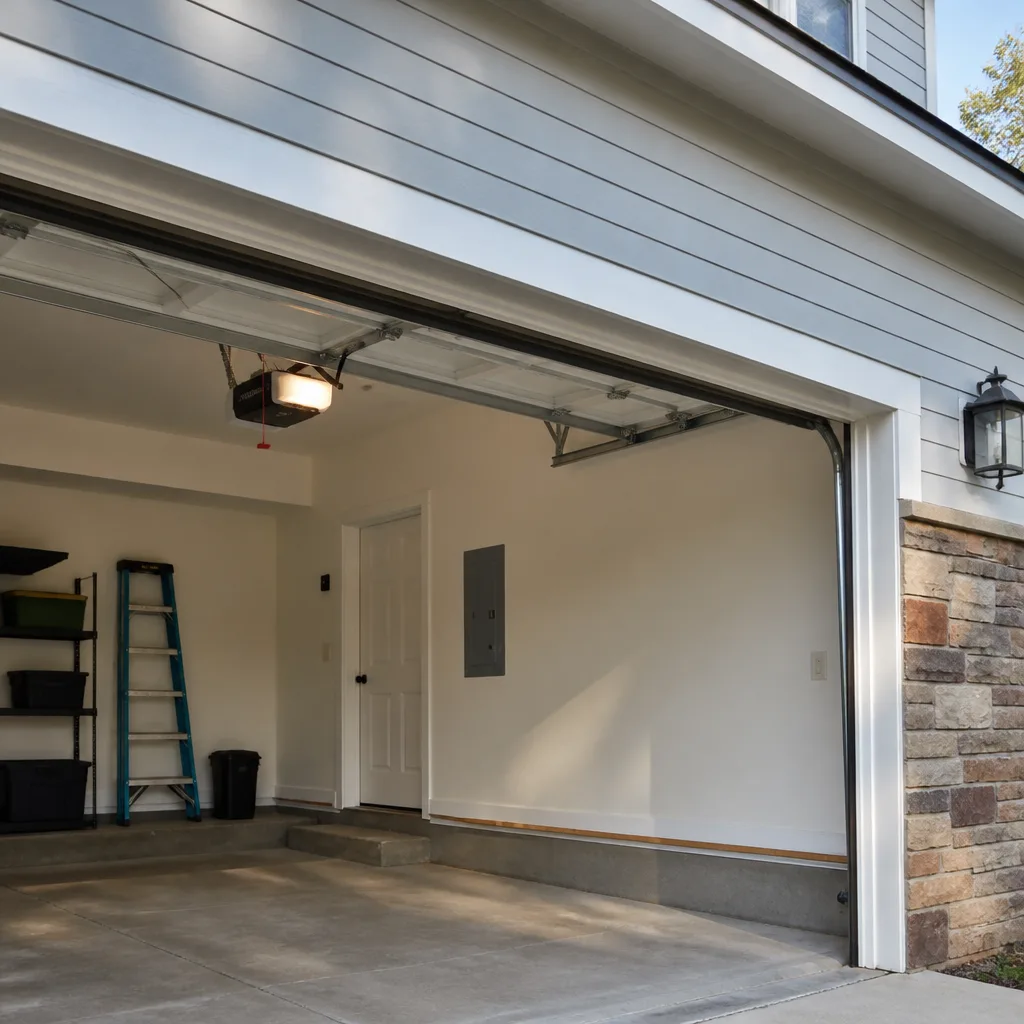 LiftMaster openers
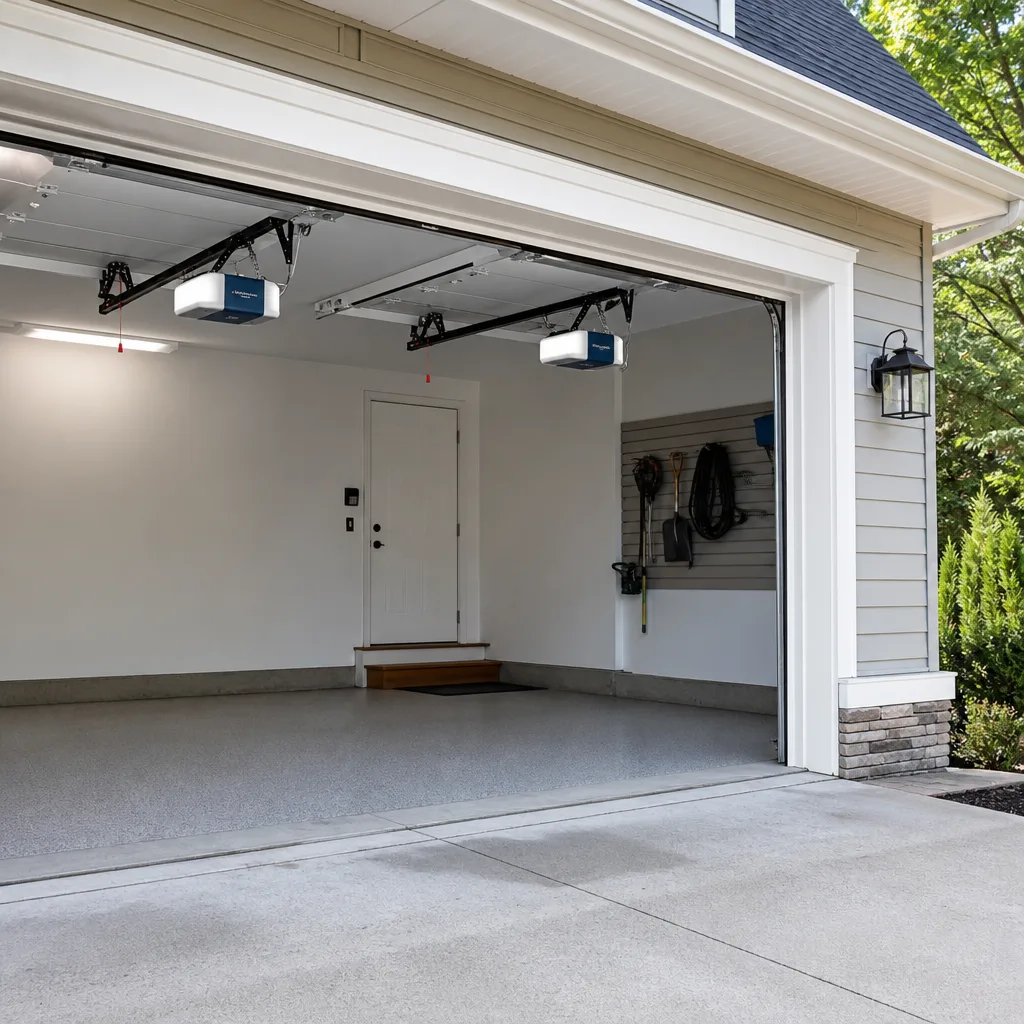 Chamberlain openers
Full 25-point door and opener safety check with every visit - springs, cables, rollers, tracks, and your LiftMaster or Chamberlain opener included
You get a price before we start. It does not change when the truck arrives.
Get your free estimateThe Complete Guide to Garage Door in Riverside
The garage door is the single largest opening in most Riverside homes, yet most owners spend more time choosing interior paint colors than they do choosing a door that faces the street every day for 20 years. That’s a strange inversion when you think about it. A garage door can cover up to a third of your home’s front elevation, and in a city with Riverside’s sun exposure, the choices you make here affect how your house looks from the curb, how hot your garage gets in July, and whether you’ll be repairing or replacing that door in a decade or in three. This guide lays out everything we’ve learned about garage doors in Riverside, from material performance under inland UV to reading a quote line by line, so you can make one decision well and not think about it again for a long time.
Styles & brands we work with
Quick Answer
A garage door in Riverside should be chosen primarily for UV resistance and thermal performance. For most Riverside homes, an insulated steel door with a polyurethane core and a factory-applied fade-resistant finish offers the best balance of durability, street appeal, and interior temperature control. Expect to pay between $1,400 and $3,800 for a quality installed door in Riverside, depending on size, material, window count, and opener work, and budget for spring replacement every 7 to 10 years regardless of door quality.
Table of Contents
- What the Riverside Climate Does to Garage Doors
- Sectional, Roll-Up, and Carriage-Style Doors in Riverside Homes
- Garage Door Materials and Realistic Lifespans in the Inland Empire
- R-Value and Why It Matters for Riverside Garages Used as Living Space
- How to Read a Garage Door Quote So You Know What You’re Paying For
- Garage Door Opener Basics for Riverside Homeowners
- A Simple Riverside Garage Door Maintenance Routine That Extends Door Life
- Common Mistakes to Avoid
- When to Call a Professional
- Frequently Asked Questions
- The Bottom Line
What the Riverside Climate Does to Garage Doors
Riverside gets an average of 274 sunny days a year, and while that’s lovely for citrus trees and weekend hikes up Mount Rubidoux, it’s hard on a garage door. The inland sun belt delivers two punches: intense ultraviolet radiation and sustained surface heat. A dark-colored steel door facing west or south in Riverside can reach surface temperatures of 150°F or higher on a summer afternoon. That’s not a guess; it’s what we measure with an infrared thermometer when we inspect doors in neighborhoods like Canyon Crest, Wood Streets, and Mission Grove.
What does that heat actually do? Three things, mostly. First, it breaks down the paint or powder coat through photodegradation. Dark colors fade first, especially reds and deep blues. Within three to five years, a dark door that looked rich on install day can look chalky and uneven, particularly on the lower panel where reflected heat from the driveway adds to the load. Second, sustained heat accelerates the breakdown of nylon rollers, plastic hinges, and rubber weatherstripping. The bottom seal on a Riverside garage door gets brittle and cracked far sooner than the same seal in, say, coastal Huntington Beach. Third, steel panels expand and contract daily with the temperature swing, and over years that thermal cycling can stress panel seams and loosen hardware.
The practical takeaway: in Riverside, choose light to medium door colors unless you’re willing to accept visible fading within a few years, and insist on a factory-applied finish rather than a site-painted door. Factory finishes are baked on under controlled conditions and hold pigment longer. We also recommend checking the bottom seal every spring and replacing it at the first sign of cracking; it’s a $20 part that protects everything behind it from dust, leaves, and the occasional Santa Ana wind pushing debris under the door.
Sectional, Roll-Up, and Carriage-Style Doors in Riverside Homes
Most Riverside homes have one of three door configurations, and each performs differently in the local climate and housing stock.
Sectional Doors
These are the standard four-to-six-panel doors that roll up on horizontal tracks into the garage ceiling. They dominate Riverside’s tract home neighborhoods including Orangecrest, La Sierra, and Arlington. Sectional doors are the easiest to insulate, the easiest to automate with modern openers, and the easiest to repair panel-by-panel if one section gets dented by a basketball or a wayward bicycle. If you live in a typical Riverside tract home built between 1980 and 2010, this is almost certainly what you have, and it’s what we recommend for replacement in most cases.
Roll-Up Doors
Roll-up doors are the coiling steel doors you see on older Riverside bungalows with low-ceiling garages, or on detached garages in neighborhoods like the Wood Streets where ceiling clearance is minimal. They have no horizontal tracks, which is their advantage; the door rolls into a drum above the opening. They’re typically uninsulated or minimally insulated, which makes the garage above them hotter in Riverside’s summer. They’re also louder and less suited to quiet openers. If you have one, it’s worth considering whether a sectional conversion is possible before investing repair money in a roll-up that fights you on temperature and noise.
Carriage-Style Doors
Carriage-style doors, also called barn-style, are sectional doors designed to look like old swing-out wooden doors, with decorative hinges and cross-buck patterns. They’re increasingly popular in Riverside’s custom and semi-custom neighborhoods like Hawarden Hills, Alessandro Heights, and Victoria, where street appearance carries real weight. They’re built on the same insulated steel platform as standard sectional doors, so you get the look of wood without the maintenance. In Riverside’s UV conditions, a factory-finished carriage door from Clopay or Amarr will hold its color and character far longer than actual wood, which we discuss below.
Garage Door Materials and Realistic Lifespans in the Inland Empire
Garage door lifespan is not a fixed number; it’s a function of material, sun exposure, maintenance, and use frequency. Here are the ranges we see day to day across Riverside.
Steel Doors: 15 to 25 Years
A quality insulated steel door, properly maintained, should last 15 to 25 years in Riverside. The lower end applies to south-facing or west-facing doors that get steady afternoon sun; the upper end applies to shaded or north-facing doors that see less thermal stress. Steel’s vulnerability in Riverside is not rust, because our climate is dry. It’s fade, panel adhesion, and occasional denting. The finish matters more than the gauge. A 24-gauge steel door with a quality factory finish will outperform a 26-gauge door with a cheap finish over 15 years in Riverside sun.
Wood Composite Doors: 12 to 20 Years
Wood composite doors, often marketed as “faux wood” or “wood-look” doors, are steel doors with a wood-grain embossed finish or a composite overlay. They give the street presence of real wood without the warping, cracking, and repainting demands of actual wood in Riverside’s dry heat. Expect 12 to 20 years depending on finish quality and exposure. Amarr’s composite and Clopay’s wood-look lines are the ones we see performing best in Riverside after year five.
Aluminum Doors: 10 to 15 Years
Aluminum doors are lightweight and rustproof, but they dent more easily and conduct heat readily. They’re most common on Riverside’s mid-century homes as original equipment or as inexpensive replacements. In Riverside, an uninsulated aluminum door turns the attached garage into a metal oven in summer. We rarely recommend bare aluminum for an attached garage in the Inland Empire. If the look matters, consider an aluminum-framed door with insulated glass panels, which performs much better thermally.
Actual Wood Doors: 10 to 15 Years With Real Upkeep
Real wood doors are beautiful, especially on Riverside’s historic homes in the Wood Streets and on custom builds in Hawarden Hills. But Riverside’s dry heat and intense sun are brutal on wood. They require sanding and refinishing every two to three years to stay presentable, and they expand and contract with our wide temperature swings in ways steel never will. If you have a true wood door and love it, keep it; just budget for refinishing. If you’re choosing new, a high-end wood-composite carriage door from Amarr or Clopay gives you 90% of the look with a fraction of the upkeep.
R-Value and Why It Matters for Riverside Garages Used as Living Space
R-value measures thermal resistance: how well a material blocks heat transfer. In Riverside, where summer garage temperatures can exceed 110°F inside an uninsulated attached garage, the difference between an uninsulated door and an insulated one is the difference between a garage that’s a storage box and a garage that’s a workshop, home gym, or playroom. This matters more here than in most of California because Riverside routinely sees 90+°F days from June through September, and your garage door is the largest uninsulated surface on the garage.
Here’s a straightforward breakdown:
- Uninsulated single-layer steel or aluminum door: R-value around R-1 to R-2. The garage tracks outdoor temperature almost immediately. Not suitable for any living or working use.
- Polystyrene-insulated door (double-layer): R-value around R-4 to R-6. Meaningful improvement. The garage runs 8 to 12 degrees cooler in the afternoon than outside. Adequate for basic storage and occasional use.
- Polyurethane-insulated door (triple-layer): R-value around R-10 to R-18. The foam is injected and fills the cavity completely, so it also adds panel strength. Attached garages with a triple-layer door can stay 15 to 20 degrees cooler than outside, especially when the shared wall with the house is also insulated. This is what we recommend if you work in the garage, exercise there, or use it as a play space for kids.
One Riverside-specific note: if your garage has a south-facing or west-facing door, the solar gain through the door itself is the biggest variable. A light-colored, high-R-value door will reduce it substantially. A dark, low-R-value door will pump heat into the garage all afternoon, and by evening the garage will be the hottest room associated with the house, radiating heat into whatever shares a wall with it. If you’re in Mission Grove or Orangecrest and wondering why the bedroom above the garage never cools down, the garage door is often the unexamined culprit.
How to Read a Garage Door Quote So You Know What You’re Paying For
This is where we see the most confusion, and it’s also where families in Riverside get surprised by invoices. A garage door quote is not just a price for a door panel. It should be a complete description of what’s included, in writing. Here’s how to read one carefully, step by step.
- Look for the door panel specification. The quote should list the manufacturer (Clopay, Amarr, Wayne Dalton, for example), the model name or number, the size, the construction (steel gauge and insulation type), the R-value, the color or finish, and whether windows are included and in what quantity and pattern. If the quote just says “16×7 white door,” ask for the details. A 24-gauge triple-layer door and a 26-gauge single-layer door can be $600 apart and look identical from the street.
- Confirm the hardware package. A proper Riverside garage door installation includes torsion springs matched to the door weight and cycle life, galvanized track, hinges, rollers, cables, and a bottom seal. If the quote doesn’t mention springs and track, assume they’re not included, and ask. Cheap installs sometimes reuse old springs, which shortens the life of the new door dramatically.
- Check for haul-away and disposal. The old door, old springs, and old track have to go somewhere. A quote that doesn’t include haul-away can grow by $100 to $200 at the end of the job. We include removal and disposal of the old door and hardware in every installation quote, stated in writing, no exceptions.
- Look for opener work. If the quote includes a new opener or reuse of an existing opener, that should be itemized. Some installations leave the existing opener in place and simply reconnect it. Others require new brackets, reinforcement, or opener replacement. If your quote is silent on the opener, ask.
- Look at the warranty language. A door panel may have a manufacturer’s warranty of several years, but the labor warranty and the spring warranty are often separate. The quote should state what happens if something fails in year one, year two, and year five. If it’s vague, request clarity before signing.
Our Garage Door Installation in Riverside guide walks through what a full Fernbrook installation quote includes line by line. A written price before work starts is the only way to protect yourself from quote inflation.
Garage Door Opener Basics for Riverside Homeowners
The opener is the most frequently used motor in the house, and in Riverside’s heat, it’s also one of the most commonly overlooked until it fails. Here’s what matters when choosing one.
Drive type. Three dominant types. Chain-drive openers are inexpensive and durable but louder; they’re fine for detached garages. Belt-drive openers are quieter and smoother, better for attached garages where bedrooms sit above the garage. Screw-drive openers, once popular in Riverside’s older homes, have fewer moving parts but are sensitive to extreme heat, which makes them a weaker choice here.
Motor size. For a standard double-wide 16-foot steel door, choose a DC-motor opener rated at 3/4 HP or higher equivalent. Undersized openers burn out early, particularly in Riverside where heat already stresses the motor. DC motors are also quieter than AC motors and offer soft-start and soft-stop, which is gentler on the door.
Smart controls. Chamberlain and Genie both make openers with app-based control, battery backup, and built-in cameras. In Riverside’s occasional power outages during Santa Ana wind events, a battery backup is genuinely useful; without it, your garage door is just a wall until power returns. We see more requests for battery backup in the last two years than in the prior decade.
The brand doesn’t matter as much as the installation. We’re trained on LiftMaster, Chamberlain, Genie, and the other major opener brands, and the failure we repair most often is not motor burnout but poor installation: unbalanced doors, misaligned photo eyes, and force settings left at factory defaults. A well-installed opener on a balanced door should run quietly and last 10 to 15 years in Riverside conditions. If your opener is louder than it used to be, see our Garage Door Repair in Riverside page for what to check before calling.
A Simple Riverside Garage Door Maintenance Routine That Extends Door Life
Garage doors are mechanical systems, and like any mechanical system, they live longer if maintained. In Riverside’s dry, dusty environment, maintenance is mostly about lubrication, cleaning, and inspection. Here’s a routine we recommend for every homeowner, twice a year in spring and fall.
- Wash the door panels. Use a car-wash soap and a soft brush or cloth, then rinse. Riverside’s airborne dust sticks to panels and, combined with moisture from morning dew, can dull the finish. This is especially important for doors facing busy streets or dirt lots. You’re not just cleaning; you’re preserving the finish.
- Inspect the bottom seal. Look at the rubber strip along the bottom edge. In Riverside heat, it cracks and flattens. If it’s cracked, split, or leaving daylight under the door, replace it. This is a minor part with a large effect on dust, pests, and garage temperature.
- Check the balance. Disconnect the opener and lift the door manually to about waist height. It should stay in place. If it drops or rises, the springs are out of balance and the opener is working harder than it should, which shortens both the spring life and the opener motor life.
- Look at the rollers, hinges, and cables. Rollers should roll, not slide. Nylon rollers wear quietly and are appropriate for Riverside homes; steel rollers are louder and wear harder on the track. Check cables for fraying near the bottom bracket. Do not touch or attempt to adjust cables yourself; that work belongs to a trained garage door technician because the tension involved can cause serious injury.
- Lubricate moving parts. Use a lithium-based spray grease on the hinges and rollers, and a silicone-based lubricant on the torsion spring. Do not use WD-40; it’s a solvent, not a lubricant, and it will attract dust, which in Riverside’s air is plentiful. If you have pets in the home, choose a pet-safe silicone spray.
- Listen to the door run. This is the one no one does. Run the door once a month and just listen. A door that’s growing louder is a door asking for attention. Grinding, popping, or metallic slapping sounds usually mean a spring is tired, a roller is failing, or a bracket is loose.
This routine takes 20 minutes twice a year. It’s the single highest-return maintenance habit a Riverside homeowner can build around their garage door. For any spring-related concern, see our dedicated Garage Door Spring Repair in Riverside page; springs are not a DIY item, and we treat them accordingly.
Common Mistakes to Avoid
- Choosing a door color for the brochure, not the street. Dark doors fade fast in Riverside’s sun. A deep navy door that looks stunning in a showroom will be chalky in three years if it faces west. Choose light or medium colors for long-term street presence, or accept that dark doors need more frequent replacement.
- Ignoring insulation because the garage is “just storage.” In Riverside, an uninsulated door turns the garage into a heat battery that sits attached to the house all day. Even if you only store holiday decorations out there, the heat still migrates into the rooms adjacent to the garage.
- Replacing the door but reusing 15-year-old springs. New doors are heavy. Old springs are tired. Reusing them means the new door starts its life out of balance and the opener labors from day one. We see this on budget installations around Riverside, and it always costs more in the long run.
- Falling for a low quote that omits haul-away, track, or spring replacement. If the written quote doesn’t say it’s included, it isn’t. Ask specifically about disposal and hardware before the work begins.
- Lubricating everything with WD-40. WD-40 is not a garage door lubricant. It’s a cleaner and degreaser that strips lubricant and attracts dust. On Riverside’s dusty air, that means a door that’s noisy again within six months.
- Attempting spring replacement as a DIY project. The torsion springs on a garage door are under high tension and can cause severe injury. In our experience, the families who call after a partial DIY spring repair always spend more on the repair than they would have on a professional service call.
- Choosing an opener by price, not drive type. A $119 chain-drive opener installed on an attached garage under bedrooms is a noise complaint waiting to happen. Choose a belt-drive DC opener if the garage shares a wall or ceiling with living space.
When to Call a Professional
There are times when a phone call is the right tool, and garage door work has a clear line. Call a professional if the door is off balance, if a cable is visibly frayed or loose, if you hear metal-on-metal grinding when the door runs, if the opener reverses for no reason, or if the door sags in the middle. These are not tune-up items; they’re structural and spring-tension issues, and the forces involved are not to be underestimated. A trained Riverside technician can diagnose and fix most balance and spring problems same day. Fernbrook Garage Doors Riverside offers free estimates in Riverside; call (559) 254-0605 and a live person answers, day or night, no voicemail tree.
For more on what repair actually involves and what it costs, see our complete Garage Door Repair in Riverside guide.
Frequently Asked Questions
A new insulated steel garage door installed in Riverside typically runs between $1,400 and $3,800, depending on size, panel construction, window count, opener work, and disposal requirements. A basic single-car door costs less; a custom carriage-style double door with windows and a high-R-value foam core sits at the upper end. Always ask for a written quote that includes springs, track, and haul-away, not just the panel. Call (559) 254-0605 for a free, no-obligation estimate in Riverside.
A standard torsion spring is rated for about 10,000 cycles, which in a Riverside household that opens the garage three or four times a day works out to roughly 7 to 10 years. Riverside’s heat doesn’t directly break springs, but thermal expansion and contraction add microscopic fatigue over time. If one spring breaks, replace both; the other is the same age and under the same load, and it will fail soon. For a spring repair in Riverside, see our Garage Door Spring Repair in Riverside page for what to expect.
You can, but the risks and failure modes are concentrated in the parts most people don’t anticipate: torsion spring tensioning, track alignment, and door balance. A door that’s 1/4 inch out of square will bind, and a torsion spring wound incorrectly can cause serious injury. For most Riverside homeowners, the honest answer is that professional installation pays for itself in door lifespan and safety. If you want to understand what the process looks like before calling, our Garage Door Installation in Riverside guide details each step.
Light neutrals including white, sand, and light gray fade the least in Riverside’s UV-heavy climate, because they reflect more sunlight and absorb less heat. Dark colors including deep brown, black, navy, and dark red fade most visibly, especially on south-facing and west-facing doors. A quality factory finish on a steel door will hold its color longer than any site-painted door, regardless of color.
In most Riverside homes, the garage door is the largest uninsulated surface on the garage. If you have an uninsulated or minimally insulated single-layer door, the afternoon sun turns the door into a radiant heater, and the garage temperature climbs past 110°F by 3 p.m. Upgrading to a triple-layer polyurethane-insulated door with a light finish is the single most effective change you can make to reduce garage heat.
It’s not required, but it’s useful. Riverside’s Santa Ana wind events periodically knock out power, and without a battery backup, your garage door won’t operate during the outage. A battery backup unit adds about $80 to $150 to the opener cost and gives you roughly 20 to 50 open/close cycles during a blackout. We recommend it for any attached garage in Riverside.
The Bottom Line
Your garage door in Riverside is both the largest moving part on your home and the largest facade surface facing the street. The decisions that matter most are not brand names; they’re material, insulation, finish, and the quality of the installation behind the panel. In Riverside’s heat and sun, a light-finish insulated steel door with quality hardware and a written installation quote will serve you for 15 to 25 years. The door itself is only half the job; everything behind it including springs, track, and how it’s installed is what determines whether you’re done thinking about your garage door for a decade or calling for repairs every other year. If you’re in Riverside and want a clear, written answer to what your door needs, call us at (559) 254-0605. A live person answers, every time.
Written by Jesse Calder, Owner at Fernbrook Garage Doors Riverside, serving Riverside since 2002.
See the difference
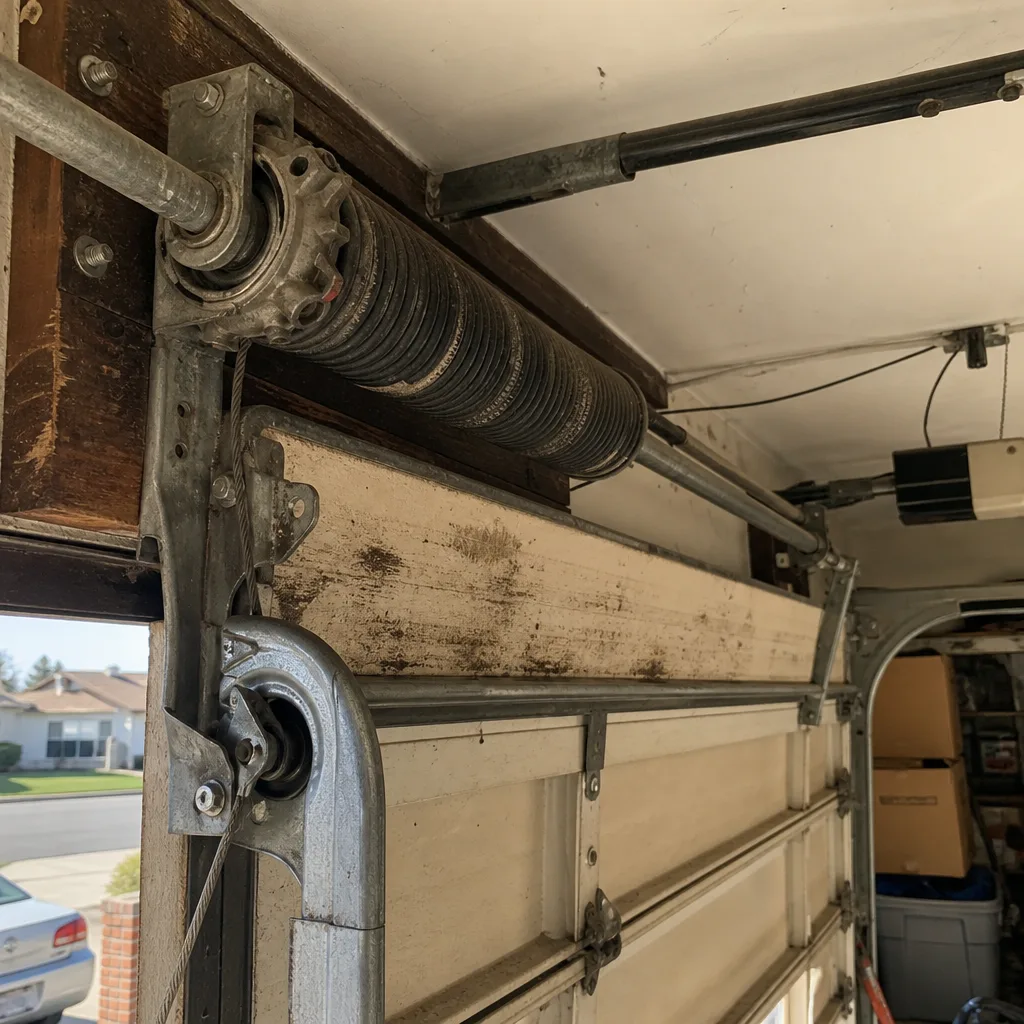 Before
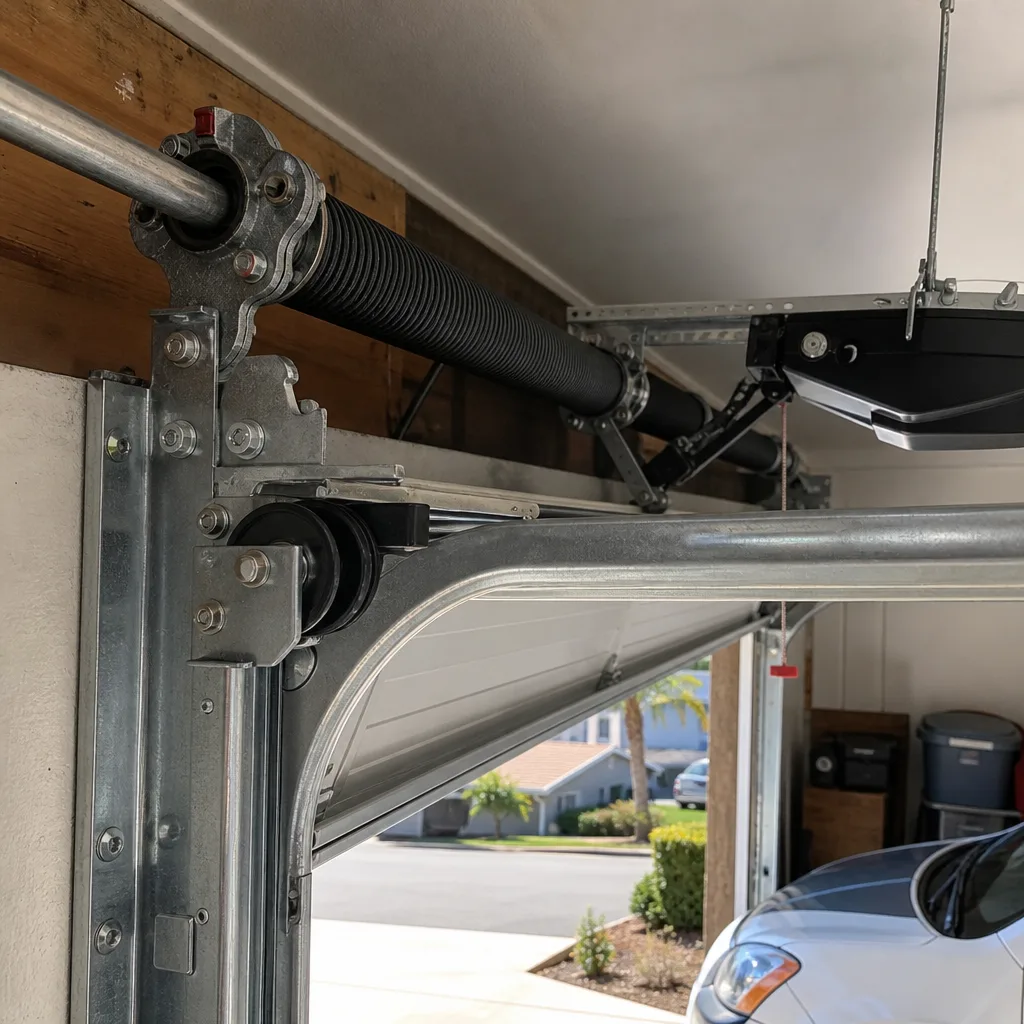 After
After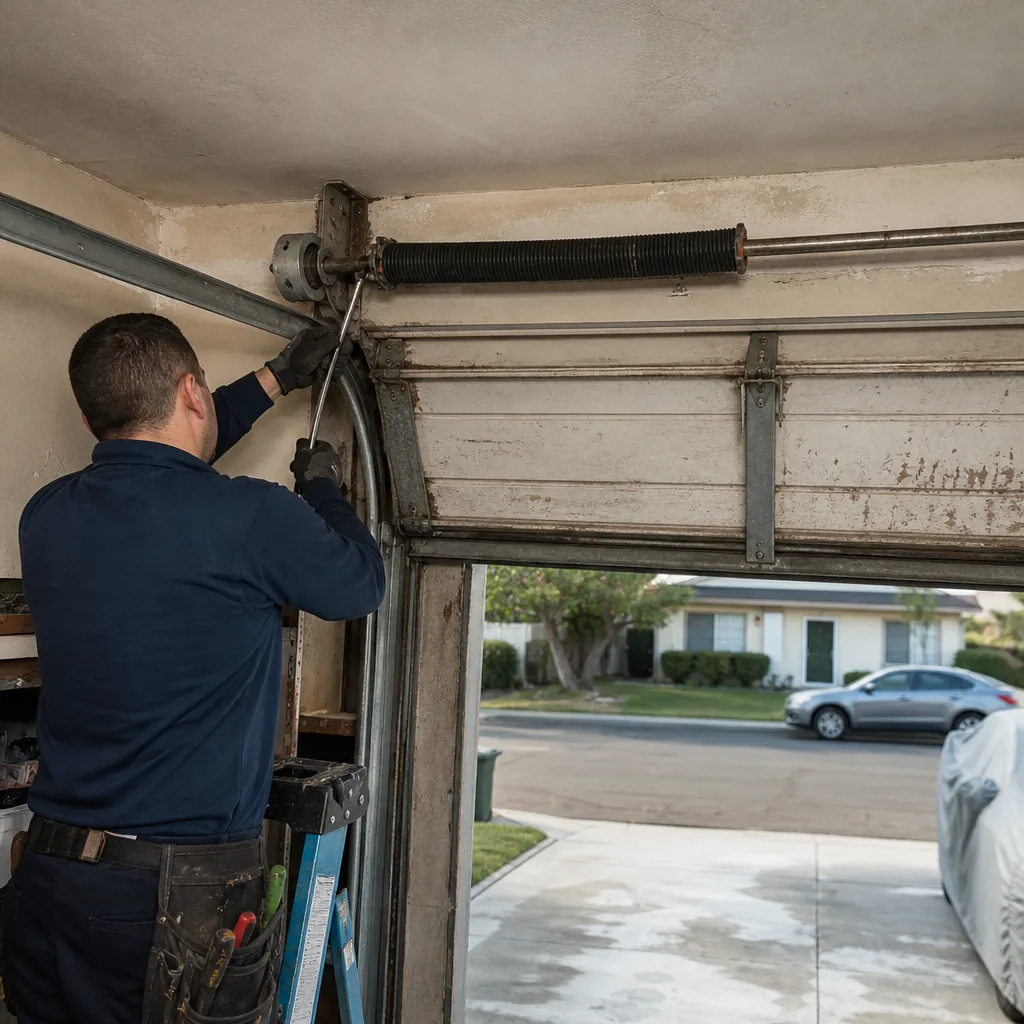 Before
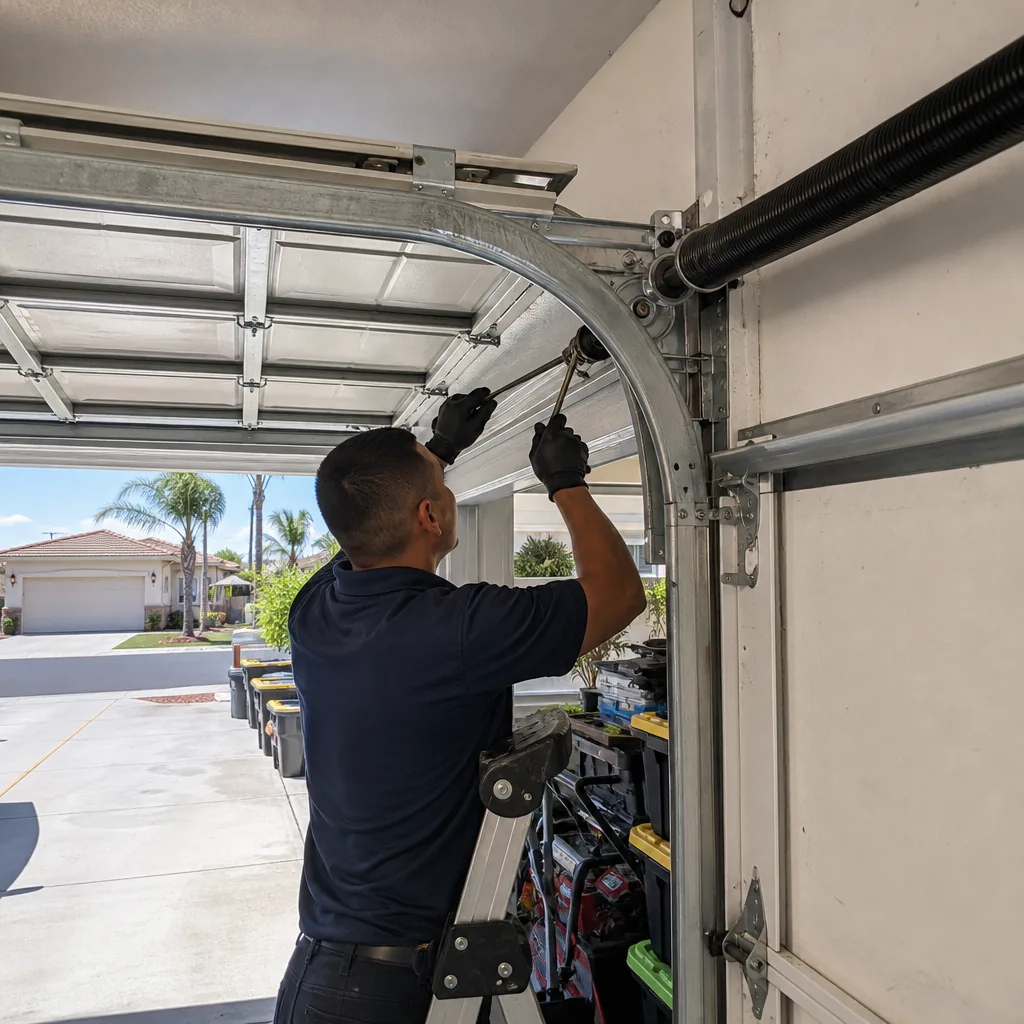 After
After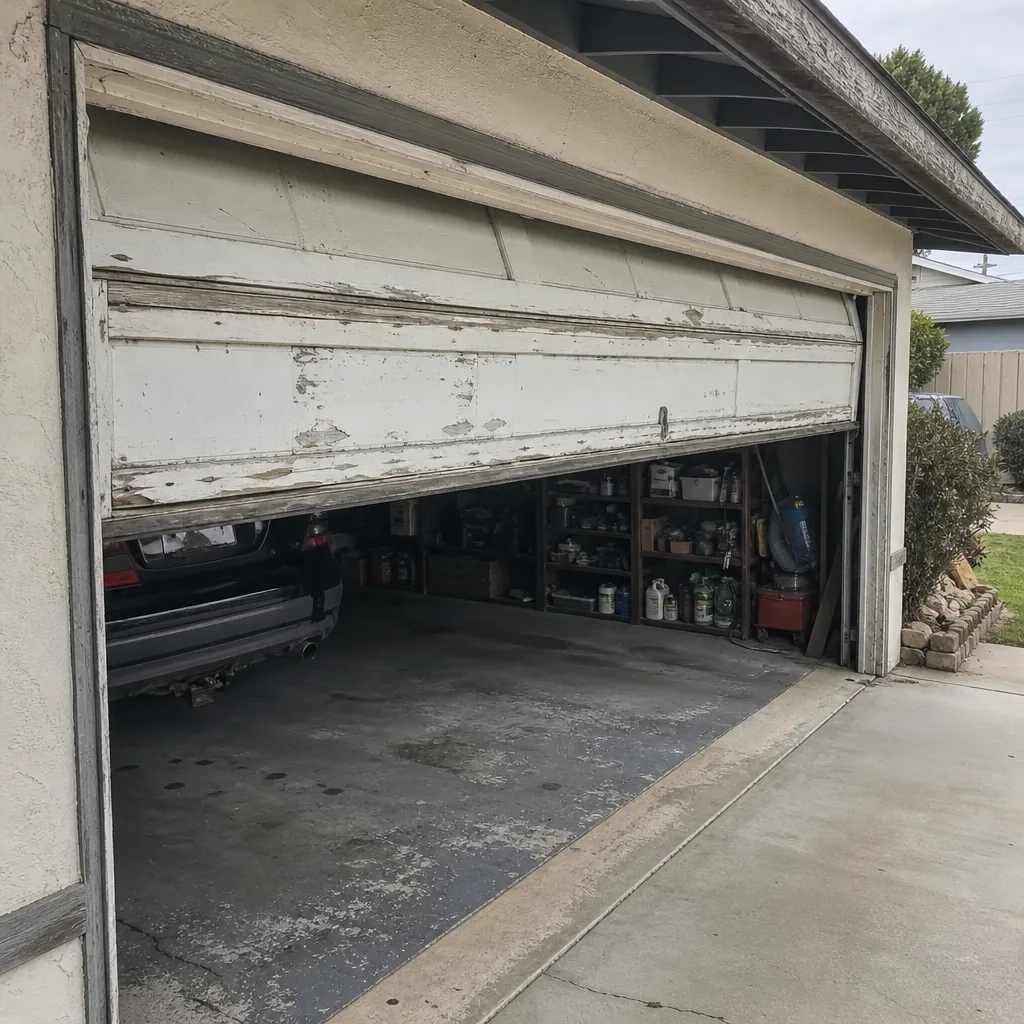 Before
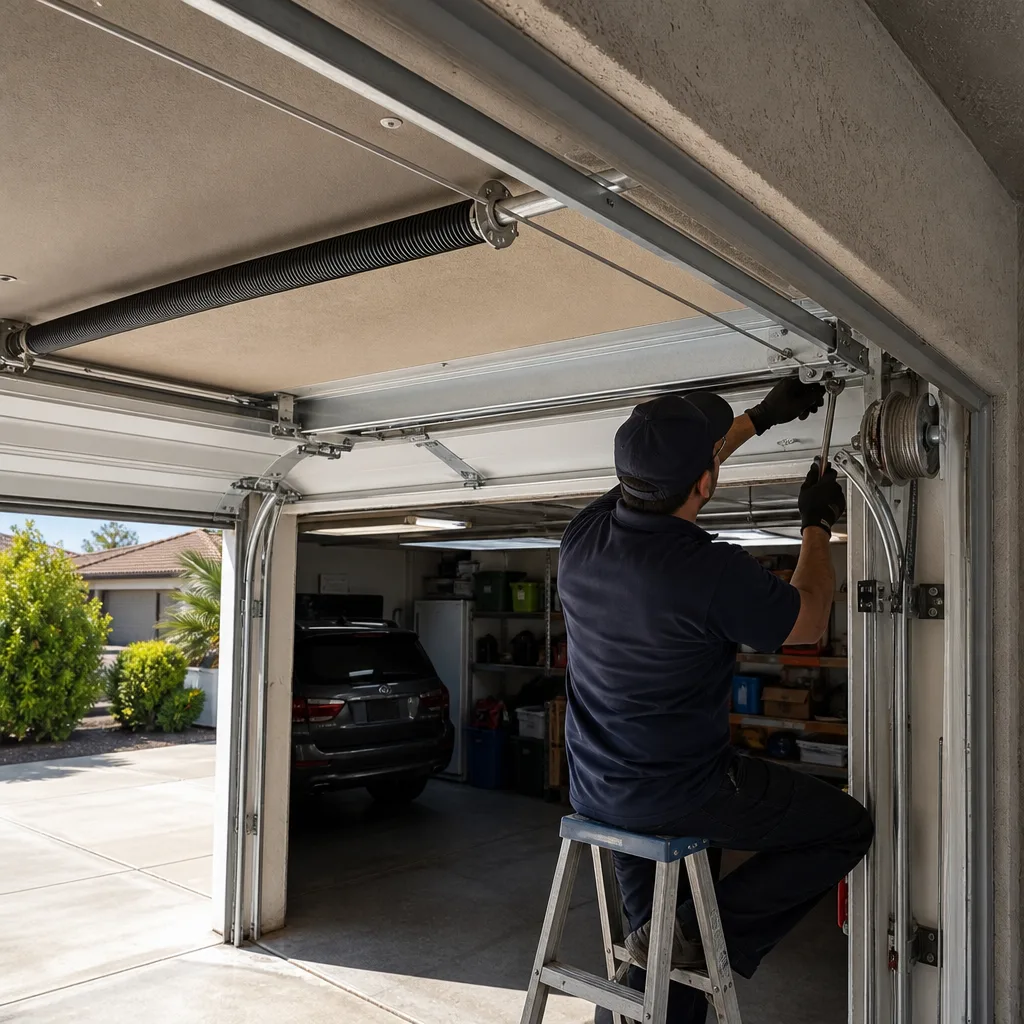 After
AfterRequest a Free Estimate in Riverside
Tell us what you need - Fernbrook Garage Doors Riverside responds fast. No obligation.