
Last updated October 17, 2026
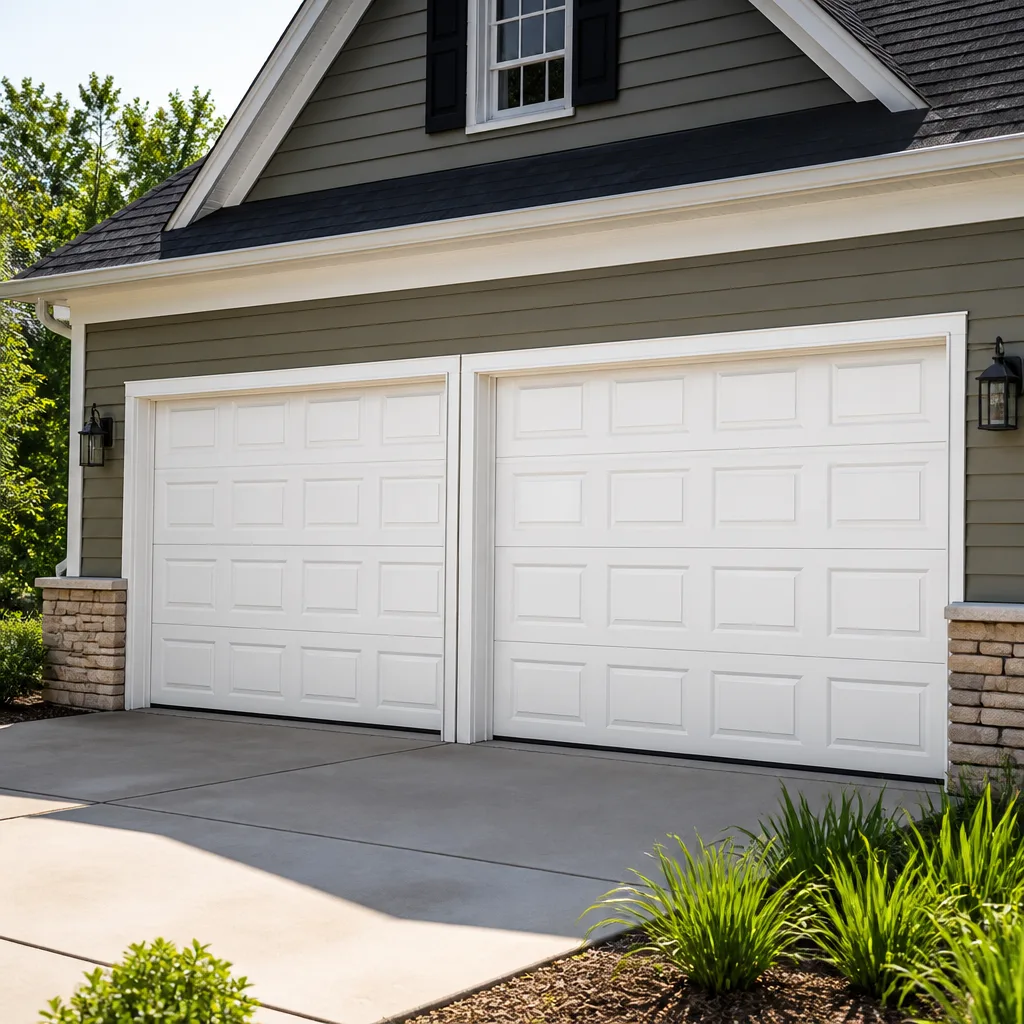 Raised-panel steel
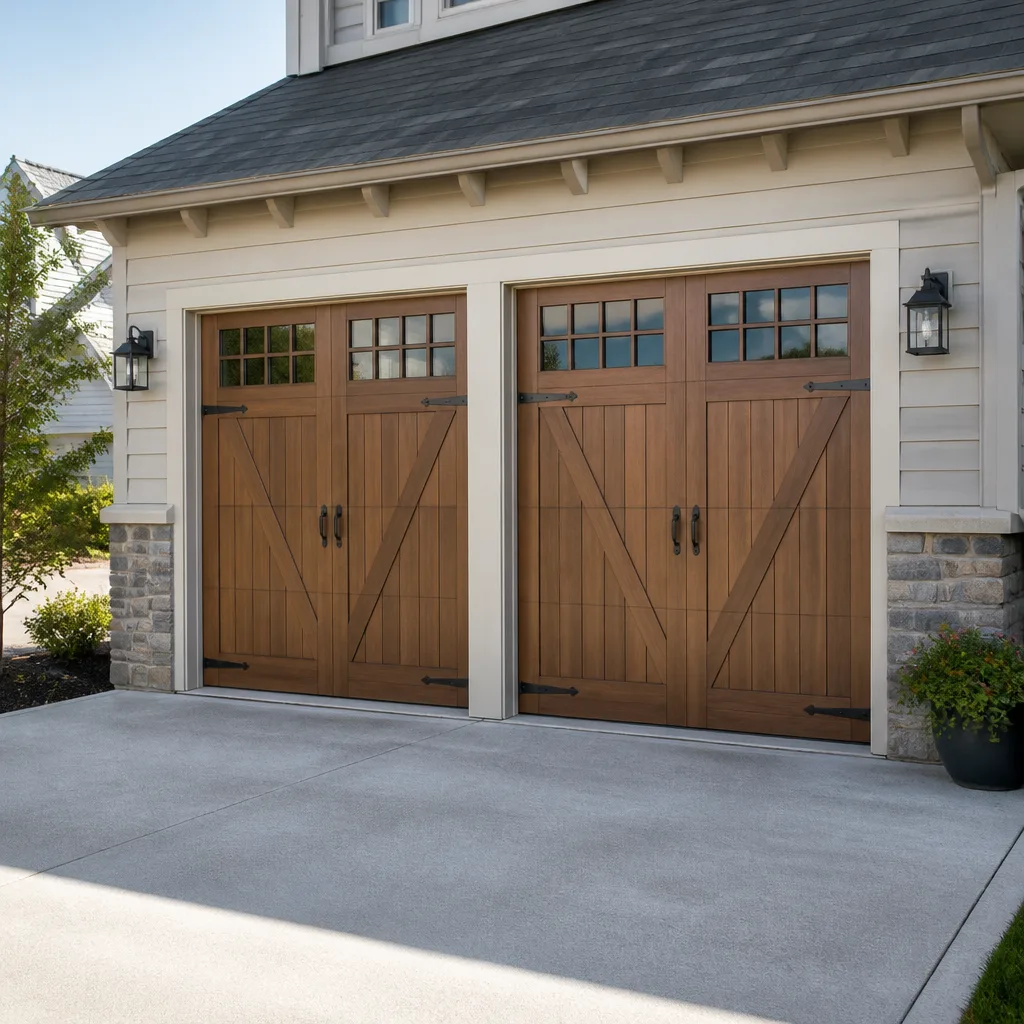 Carriage house
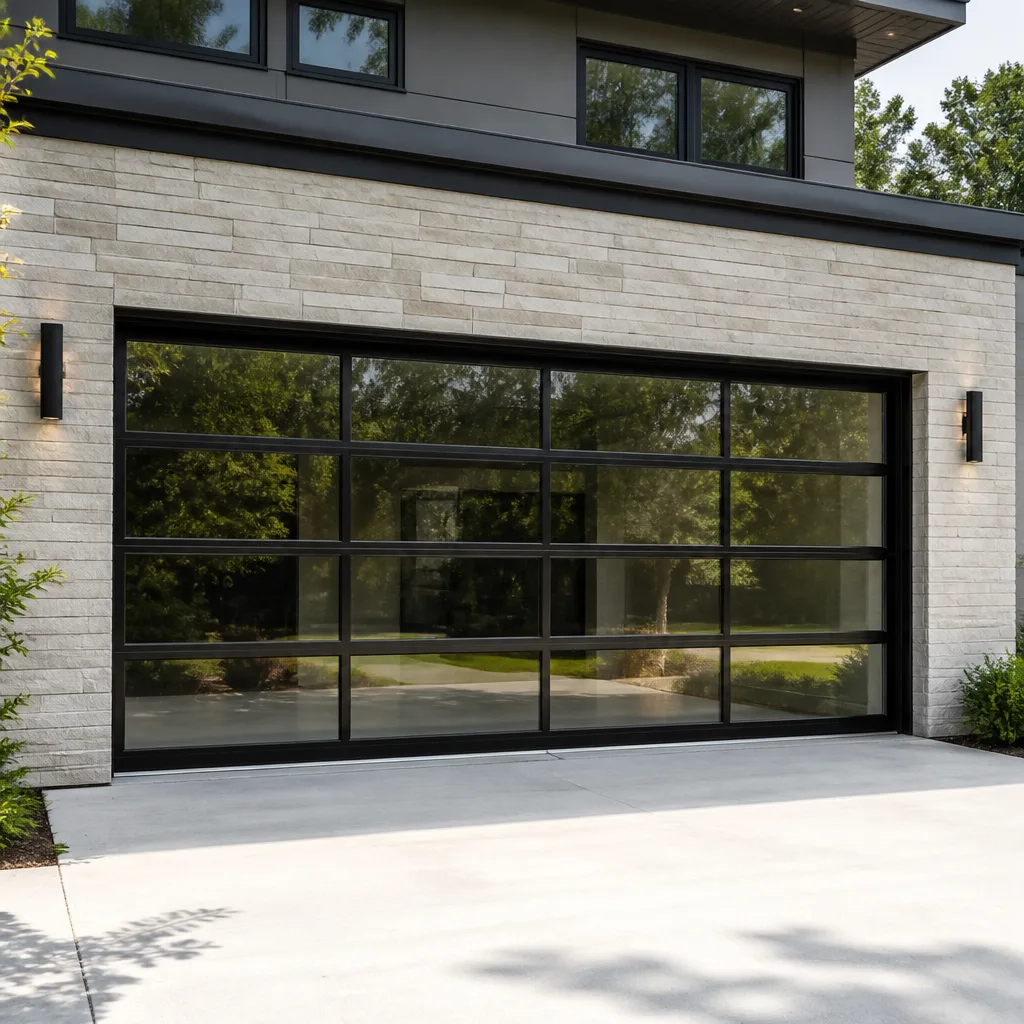 Full-view glass
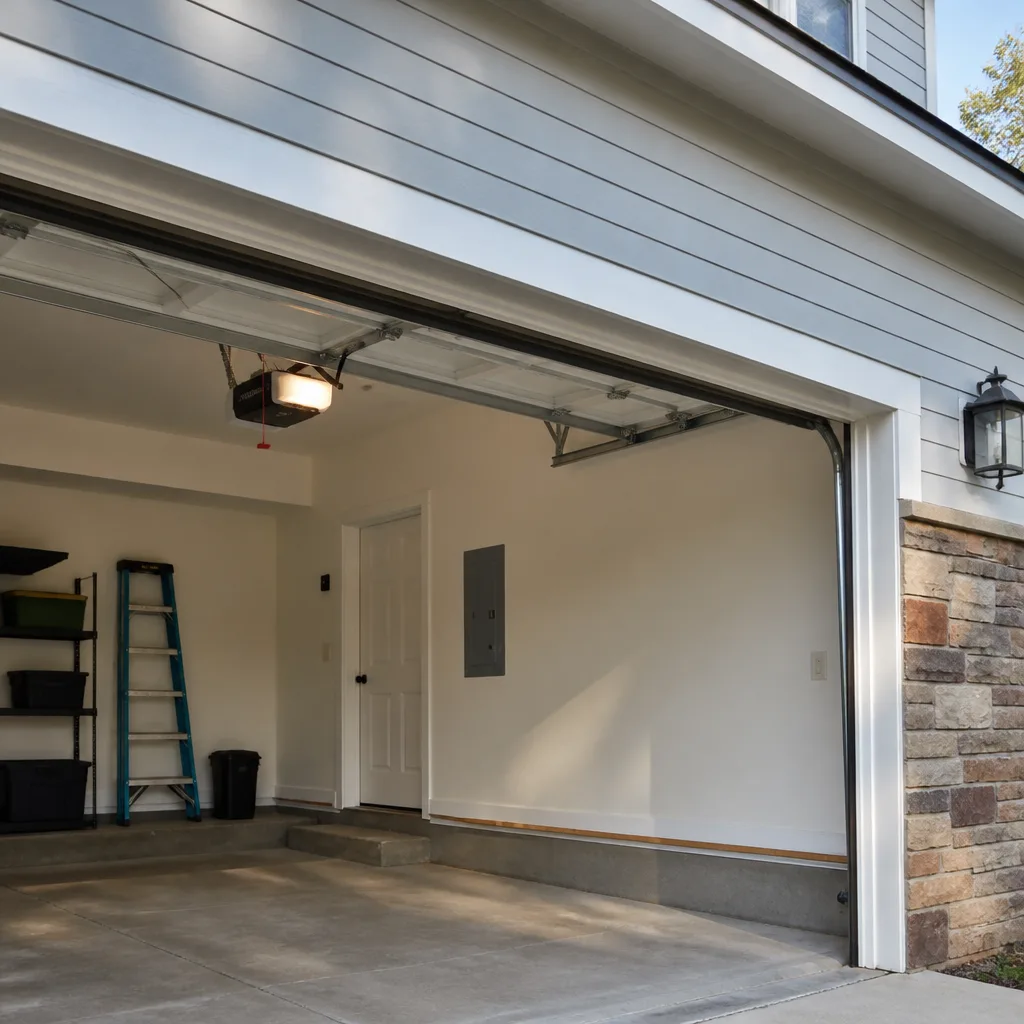 LiftMaster openers
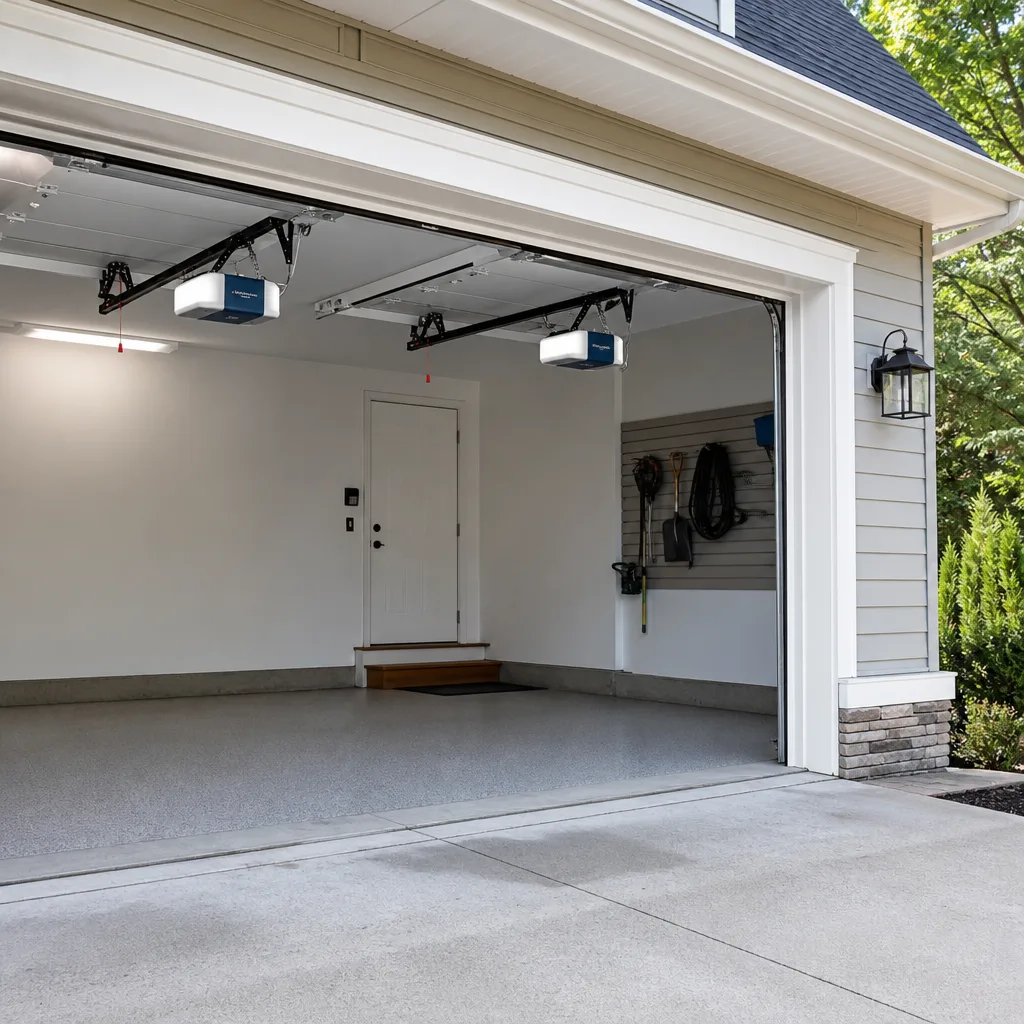 Chamberlain openers
Full 25-point door and opener safety check with every visit - springs, cables, rollers, tracks, and your LiftMaster or Chamberlain opener included
You get a price before we start. It does not change when the truck arrives.
Get your free estimateGarage Door Warning Signs: A Riverside Homeowner’s Reference Guide
Most garage doors in Riverside don’t fail without warning. They announce trouble weeks ahead through sound, movement, and appearance. The average torsion spring doesn’t snap silently. It telegraphs its fatigue through a specific clicking sound under load and a door that moves unevenly. Most homeowners hear it and assume it’s normal, because nobody ever told them what normal sounds like.
This Complete Guide to Garage Door in Riverside gives you that reference point. You’ll learn what your garage door should sound like, how to spot cable wear from a safe distance, why a door that reverses early is sending you a signal about safety sensors rather than convenience, and which cosmetic changes on Riverside doors indicate moisture or UV damage before they become structural. You’ll finish with a clear picture of when a problem is a small fix, when it needs a professional, and what either one should cost.
Quick Answer
The most common garage door warning signs in Riverside homes are grinding or popping sounds from worn rollers and hinges, a door that creaks unevenly on one side indicating balance or spring trouble, visible fraying on lift cables, a door that reverses before fully closing due to misaligned safety sensors, and rust or bubbling on the lower door panels from irrigation overspray and Riverside’s dry heat cycle. A homeowner who checks these monthly can catch a $40 roller replacement before it becomes a $600 opener motor failure, as explained in our Seasonal Garage Door Care for Riverside: Year-Round Homeowner’s Guide.
Styles & brands we work with
Table of Contents
- The Sound-by-Sound Reference: What Your Garage Door Is Telling You
- How to Check for Cable Fraying from a Safe Distance
- The Manual Lift Test: Why Balance Predicts Opener Motor Failure
- Why a Door That Reverses Before Closing Needs Attention Now
- Cosmetic Warning Signs on Riverside Doors: When Moisture and UV Become Structural
- How Riverside’s Climate Creates Specific Door Problems
- Your Monthly 10-Minute Garage Door Checklist
- Common Mistakes to Avoid
- When to Call a Professional
- Frequently Asked Questions
The Sound-by-Sound Reference: What Your Garage Door Is Telling You
A healthy garage door makes a consistent, low hum from the opener motor and a soft roll as the door travels its track. That’s the entire sound signature. Anything else is information, and each sound maps to a specific component. Here’s what we hear most often on service calls across Riverside, from Canyon Crest to Wood Streets and out toward La Sierra.
Grinding
Grinding means metal on metal without lubrication or a roller that’s seized and dragging instead of rolling. The fix is usually straightforward: clean the track, replace worn rollers, and lubricate the moving parts. If the grinding is coming from the opener motor housing itself rather than the door track, that’s a different issue. The plastic gears inside many openers, especially older Chamberlain and Craftsman units, chew themselves down over time. A grinding motor is often a failing gear, and running it makes the repair more expensive.
Popping
Popping is the sound of a section hinge binding and releasing as the door rounds the curved track. It’s most common on doors with older hinges that have lost their factory lubrication, or on sections that have shifted slightly out of alignment. Popping at a single point on each cycle will get louder over time. It rarely self-corrects.
Clicking
This is the one we listen for most carefully on torsion spring systems. A clicking sound when the door is under load, especially during the first ten inches of travel, sometimes indicates a torsion spring that’s beginning to fatigue internally. Springs don’t always snap at once. Sometimes they lose a small amount of tension internally and settle, which changes the sound and the balance of the door. If your door clicks in rhythm with movement and has become heavier to lift manually, we recommend a spring inspection sooner rather than later. You can reach us at (559) 254-0605 and we’ll walk through what you’re hearing.
Squealing
Squealing is almost always a dry roller stem or a dry bearing in a roller wheel. It’s the least serious sound on this list and the easiest to fix. But lubrication only works if the roller can still spin freely. A roller that’s worn flat will keep squealing no matter how much lubricant you apply, because the wheel isn’t rolling anymore. If you replace them, nylon rollers are noticeably quieter than steel, which matters if you have a bedroom over the garage or kids who nap near the interior door.
What Normal Sounds Like
Normal is a low hum from the opener, a soft roll at each hinge point, and consistent speed. No pops, no clicks, no grinding, no metal-on-metal scrape. If you’re not sure whether what you’re hearing is normal, record ten seconds of your door opening on a phone and have someone who works on doors every day listen to it. We field these calls regularly at Fernbrook Garage Doors Riverside home and can usually tell from the recording whether it can wait or needs a visit.
How to Check for Cable Fraying from a Safe Distance
Lift cables are under enough tension to cause serious injury if they snap while you’re near them. This is not a component to touch, poke, or pull. The good news is that a visual inspection from six feet away will catch most cable problems long before they fail.
- Close the garage door completely and stand inside the garage, about six feet back from one side of the door.
- Look at the cable where it wraps around the drum at the top of the door, above the track. This is where you’ll see the first rust staining or broken wire strands.
- Follow the cable down to where it attaches to the bottom bracket at the lower corner of the door. Look for rust, dark staining, or any wire that’s poking out from the cable’s twist pattern.
- Repeat on the other side.
What you’re looking for: strands of wire that have separated from the main cable, rust-colored staining on the cable or the drum, or a cable that looks flattened or kinked rather than round. Any of these means the cable is compromised. Cables rarely break when the door is closed and at rest. They break when the door is moving and the stress hits the damaged section. If you see fraying, don’t run the door again until a technician has replaced the cable. We’ve seen what happens when a cable lets go at the bottom bracket, and it’s not worth the risk.
The Manual Lift Test: Why Balance Predicts Opener Motor Failure
There’s one check that predicts more opener motor failures than any other: the manual lift test. It takes under a minute and tells you whether your springs are still doing their job. A door that’s properly balanced should feel nearly weightless when you lift it manually. Here’s the step-by-step.
- Close the garage door.
- Pull the red emergency release cord hanging from the opener rail. This disconnects the door from the opener carriage.
- Place both hands on the bottom edge of the door and lift to about waist height, then let go.
- Watch what happens.
A balanced door will stay where you left it, or drift very slowly. A door that drops from waist height is heavy, which means the springs aren’t counterbalancing the weight anymore. A door that shoots upward has springs that are over-tensioned. Either condition means the opener motor is working far harder than it was designed to, on every single cycle. That’s the hidden cost here. When springs lose tension, the opener doesn’t know it. It just keeps pushing. Six months later the motor burns out, and the repair went from a $200-$300 spring replacement to a $300-$600 opener plus springs.
In Riverside, where summer garage temperatures routinely exceed 110 degrees, opener motors already work harder than they do in coastal climates. Heat shortens motor life and speeds up spring fatigue. If the manual lift test shows a heavy door, that’s your early warning. For a full picture of what’s involved, see our page on Garage Door Spring Repair in Riverside.
Why a Door That Reverses Before Closing Needs Attention Now
When a garage door starts down and then reverses before it reaches the floor, it’s almost always the safety sensors, not the door itself. These are the two small photo-eye units mounted about six inches off the ground on either side of the door opening. They shoot an invisible beam across the doorway. If anything breaks that beam while the door is closing, the opener reverses as a safety response.
What many Riverside homeowners don’t realize is that the sensors don’t have to be perfectly broken to malfunction. A sensor that’s slightly misaligned, lightly dusted, or nudged out of position by a trash bin can interrupt the beam intermittently. The door might close fine in the morning and reverse in the afternoon when the sun angle hits the sensor directly. Riverside’s intense afternoon sun is a common culprit for intermittent sensor trips. Direct sunlight can overwhelm the receiving sensor, which reads bright light as a broken beam.
Other causes: spider webs across the sensor lens, a loose wire at the back of the sensor housing, or a sensor bracket that’s been bent by a car tire. A door that reverses randomly is telling you that the safety system is compromised. This is a fix-it-now issue, not a fix-it-this-weekend issue, because it means the door may not close when you need it to secure the house. The repair is usually quick and inexpensive, and it’s covered on most opener brands including LiftMaster, Genie, and Raynor. Our full guide on Garage Door Repair in Riverside walks through what the most common repairs cost.
Cosmetic Warning Signs on Riverside Doors: When Moisture and UV Become Structural
Cosmetic changes on a garage door are easy to dismiss as normal wear. Some of them are just that. But specific patterns indicate problems that will eventually affect the door’s structure, not just its paint.
Rust Along the Bottom Panel
Steel doors in Riverside corrode from the bottom up. The cause is usually irrigation overspray. Sprinklers that hit the lower panel every morning keep the bottom edge damp for hours, which is all rust needs. You’ll see it first as small rust spots or bubbling paint along the bottom six inches of the door. Left alone, it eats through the steel and eventually through the bottom weather seal, letting dust and heat into the garage.
Bubbling or Peeling Finish on South-Facing Doors
Riverside’s UV index is high from May through September. A dark-colored steel door that faces south or west takes direct sun for six to eight hours a day in summer. The factory finish on modern doors like Amarr and Wayne Dalton models is durable, but nothing is immune to years of UV exposure. When you see the finish start to chalk, fade, or bubble, the UV protection is failing, and the metal beneath is now exposed. A quality refinish or panel replacement extends the door’s life significantly.
Warping or Delamination on Wood Composite
Wood composite doors, and even solid wood doors, move with humidity. Riverside’s dry air and hot summers pull moisture out of the wood, which causes panels to shrink and crack. You’ll see hairline cracks in the panel seams first, usually at the center of the panel. If water gets in through those cracks during the winter rains, the panel swells and begins to delaminate. This is the point where the cosmetic issue becomes structural. Once the panel layers separate, the door loses rigidity, and the hinges are pulling on material that’s no longer holding together.
How Riverside’s Climate Creates Specific Door Problems
Riverside sits at the edge of the Inland Empire, and that geography comes with a particular set of challenges for garage door hardware. August temperatures routinely top 100 degrees, which heats the metal components unevenly. The torsion spring above your door is under constant tension, and heat cycling causes micro-expansion and contraction in the steel. Over years, that contributes to metal fatigue at a faster rate than you’d see in a more moderate climate.
Dust is the other Riverside factor. The dry air and the Santa Ana winds carry fine particulate that settles inside the tracks. Dust mixes with old grease and becomes a paste that coats rollers and slows their spin. A roller that doesn’t spin freely becomes a drag point, and the opener works harder to overcome it. If you open and close your door twice a day on average, that’s about 730 hard cycles a year. It adds up.
The practical takeaway: Riverside homeowners should expect to replace rollers and lubricate moving parts more often than someone in a coastal climate. It’s not that Riverside doors are built differently. It’s that the environment tests them harder. A lubrication and roller check once every six months will keep most of the climate-related wear from ever becoming a repair.
Your Monthly 10-Minute Garage Door Checklist
Here’s a monthly routine that covers the most common failure points. It’s designed to catch the small things before they become large ones.
- Listen to a full cycle. Open and close the door from the wall button, not the remote. Listen for any sound that isn’t a low hum and a soft roll.
- Watch the door travel. It should move at a consistent speed from fully open to fully closed. Hesitation, jerking, or a door that speeds up on the way down means a balance problem.
- Check the cables visually. Six feet back, look at both cables from the top drum down to the bottom bracket. Look for fraying, rust, or flattening.
- Test the balance. Pull the red release cord and lift the door to waist height. It should stay.
- Check the sensors. Make sure both photo-eyes are clean and aimed at each other. Most have a small indicator light that glows steady when aligned.
- Look at the bottom seal. Check for cracks, gaps, or daylight showing under the closed door.
Ten minutes a month will flag nearly every problem this guide describes long before it becomes an emergency. If you find something that doesn’t look right and aren’t sure what it means, call (559) 254-0605 and describe what you’re seeing. A live person answers, and we’ll give you an honest read on whether it needs attention now or can wait.
Common Mistakes to Avoid
- Lubricating with WD-40. WD-40 is a solvent, not a lubricant for garage door parts. It strips the factory grease and leaves the roller stems dry. Use a silicone or lithium garage door lubricant instead.
- Ignoring a door that’s slightly heavier than it used to be. Springs lose tension gradually. The change in manual lift weight is subtle from week to week, but it’s the earliest sign of spring fatigue.
- Replacing the opener when the springs are the problem. If the door is heavy, a new opener will fail the same way the old one did. Check the balance first.
- Continuing to run a door with frayed cables. A frayed cable can break while the door is moving. Once it breaks, the door can drop unevenly and damage the tracks, the panels, and anything underneath it.
- Painting over rust without treating the metal. Painting over rust on a steel door hides the problem for a season, then the rust breaks through worse than before. The rust needs to be neutralized first.
- Waiting until the door won’t open to call. Most repairs in Riverside cost two to three times more when the door has stopped working entirely rather than when the warning sign first appears.
When to Call a Professional
There are some warning signs you can address on your own: cleaning sensors, lubricating rollers, tightening a loose hinge bolt, replacing a worn bottom seal. There are others that need a trained technician, full stop. Frayed cables, a heavy door that fails the manual lift test, grinding from the opener motor, and popping torsion springs all involve components under significant tension or precision adjustments. These are not weekend projects. If you’re unsure, Fernbrook Garage Doors Riverside offers free estimates in Riverside. Call (559) 254-0605, describe the sound or the symptom, and we’ll tell you honestly whether it can wait. When our technicians arrive, they bring a written price before any work starts. You’ll know the number before you approve anything.
Frequently Asked Questions
The most common warning sign is a clicking sound when the door is under load during the first few inches of travel, often paired with a door that feels heavier than it used to during a manual lift test. In our experience across Riverside, this combination shows up weeks before the spring actually breaks. If you’re hearing it, call (559) 254-0605 for a spring inspection and an exact quote, which is free.
A loud bang or pop when the door opens is usually a section hinge binding and releasing as the door rounds the curved track, though it can also be a torsion spring settling. The first is a minor fix. The second needs attention sooner. The best way to tell them apart is by checking the door’s balance with a manual lift test. If the door drops or feels heavy, the bang is likely spring-related, and a technician should inspect it.
Yes, in most cases. A door that reverses before closing is almost always a safety sensor issue, not an opener failure. Misaligned sensors, dirty lenses, direct sunlight interference, or a loose wire are the usual causes. These repairs are typically quick and inexpensive, and they don’t require a new opener. A technician can diagnose it in person, and you’ll get a written price before the work starts.
In Riverside’s dry, dusty climate, we recommend lubricating the rollers, hinges, and springs every six months, and inspecting the tracks for dust buildup at the same time. The heat and fine dust from Santa Ana winds coat moving parts faster than in coastal areas. A six-month routine will keep most climate-related wear from becoming a repair cost.
Common repairs in Riverside fall into clear ranges: roller replacement runs $120-$180, a broken spring replacement typically costs $200-$350, cables run $150-$250, and a new opener motor runs $300-$600 installed. These are the numbers you’ll see before any work starts because every Fernbrook visit includes a written price. No surprise invoices, ever.
No. Estimates are free. Call (559) 254-0605 and a live person will answer, day or night. If a visit is needed, the technician provides a written price before any work begins, backed by the 365-Day Done Right Promise. If it’s not done right, we make it right. That’s the whole agreement, stamped on every job.
See the difference
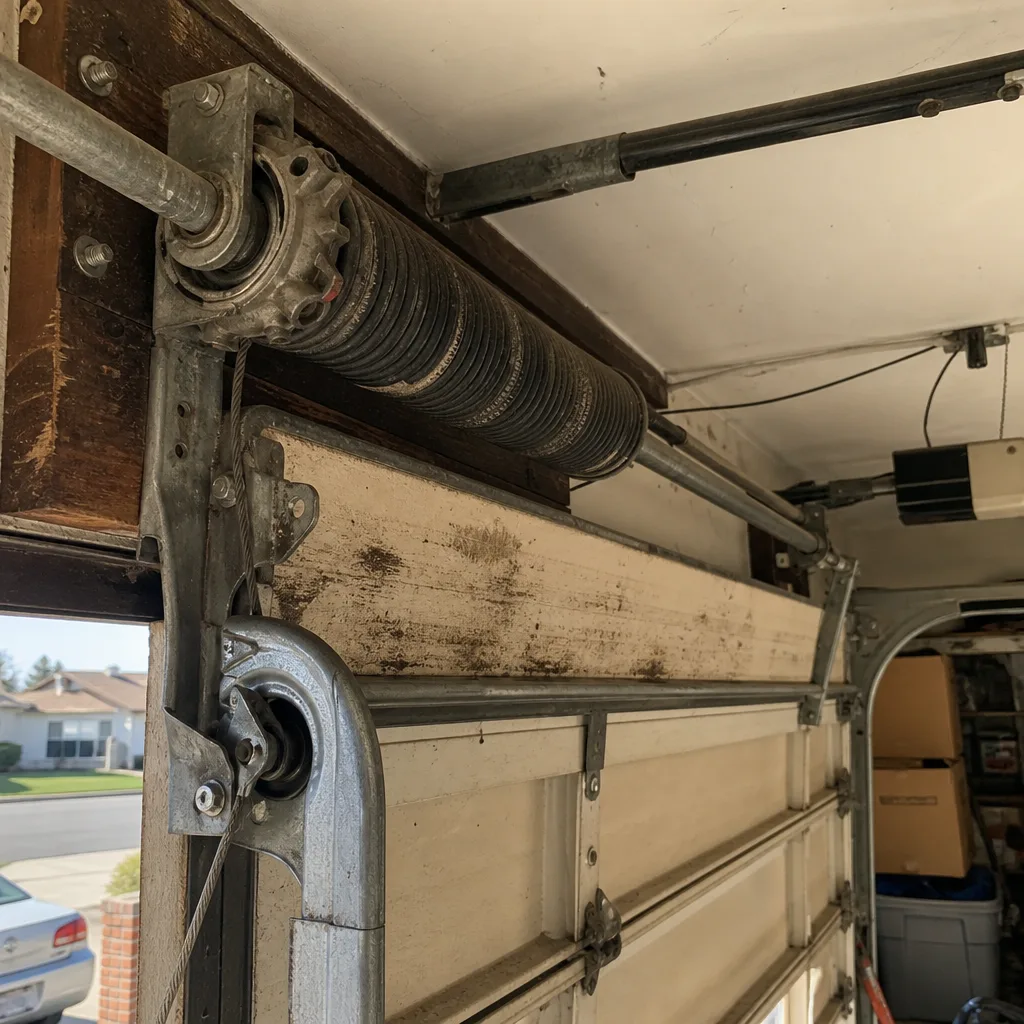 Before
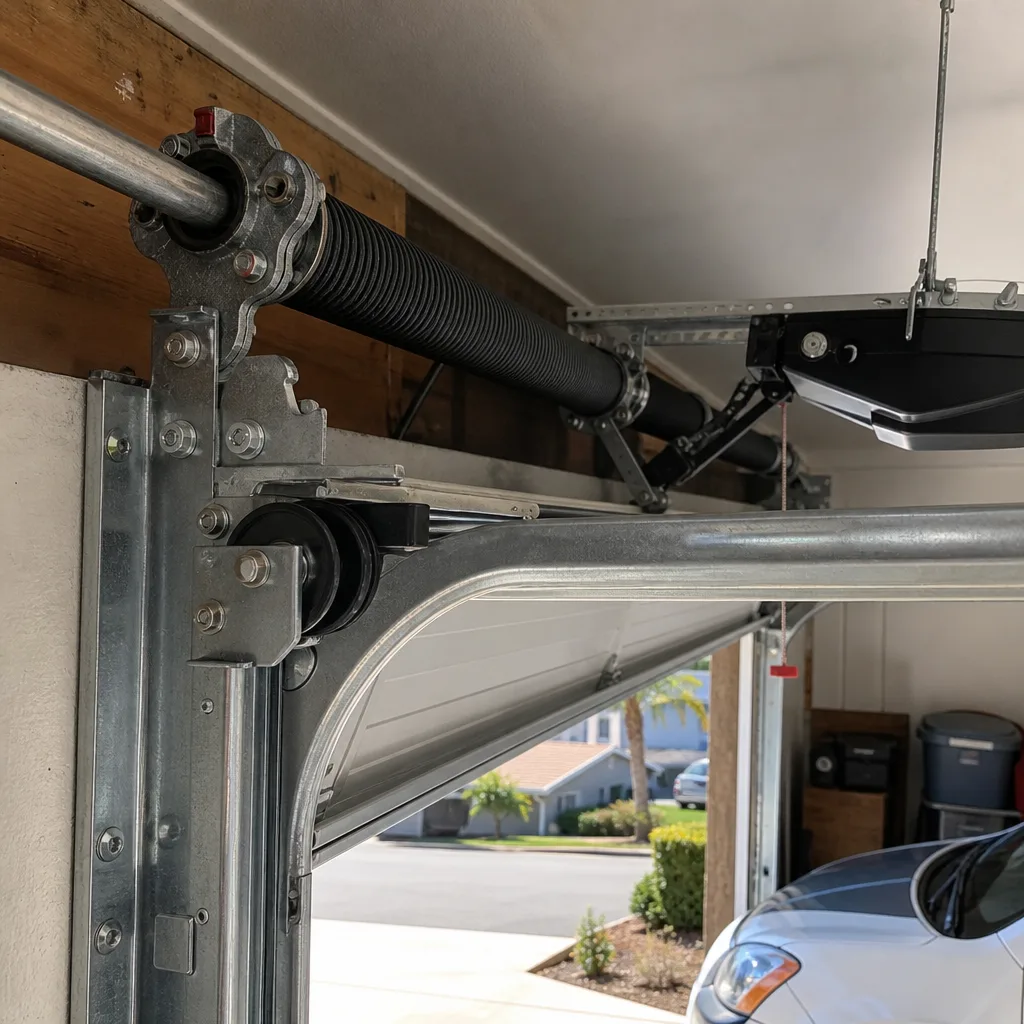 After
After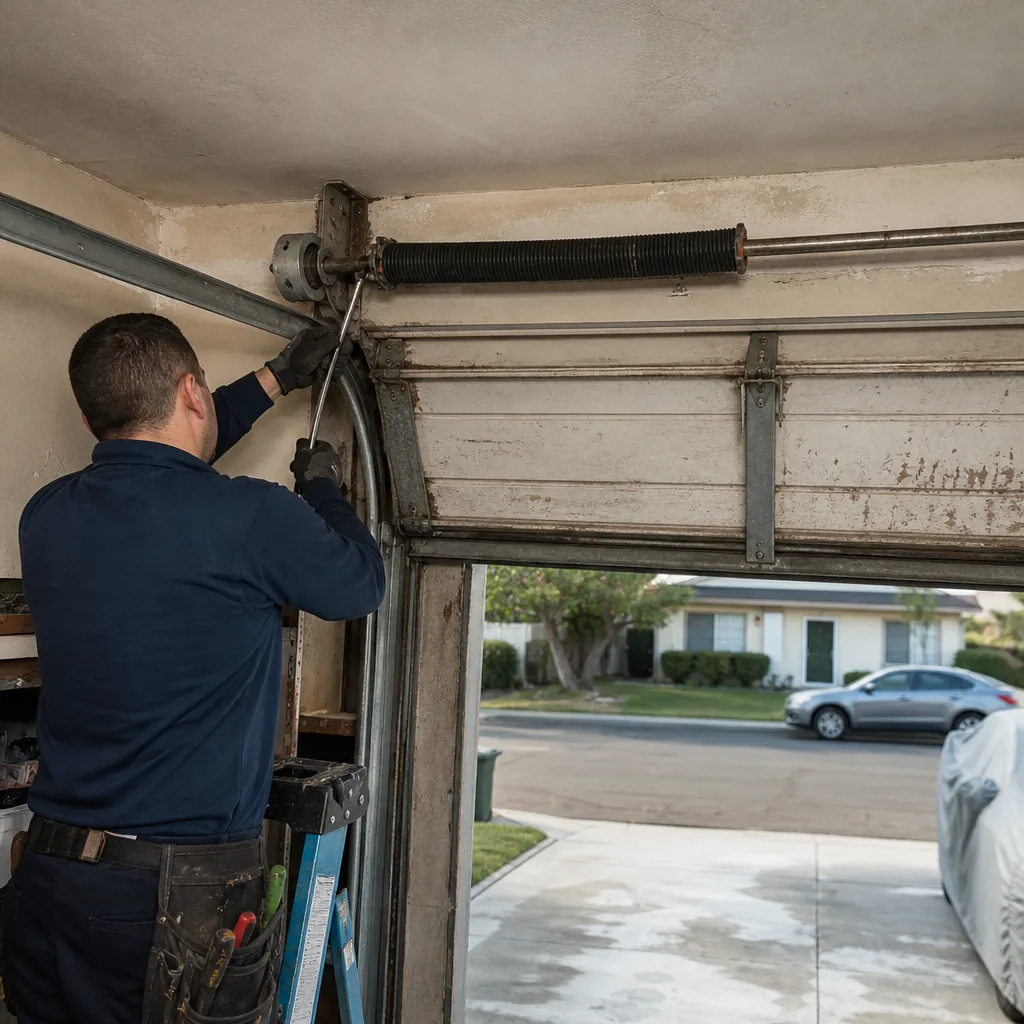 Before
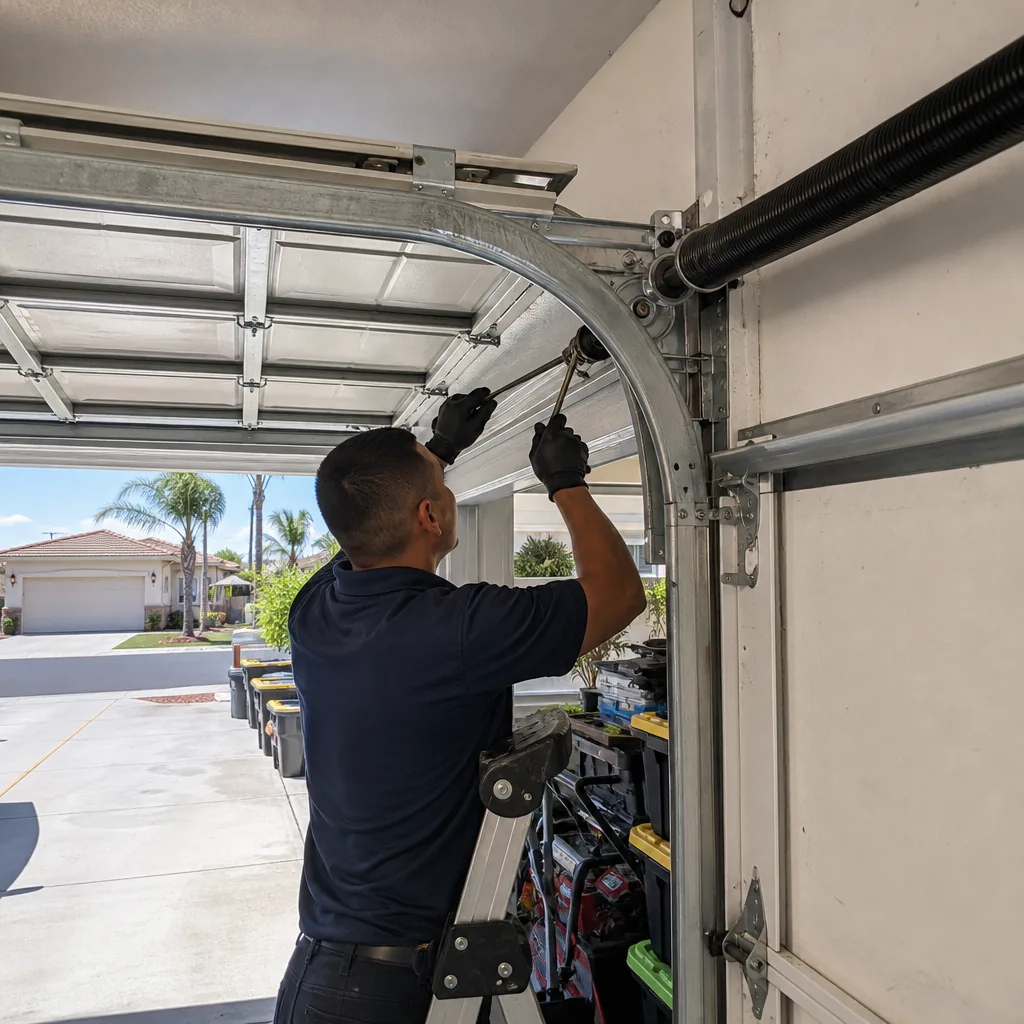 After
After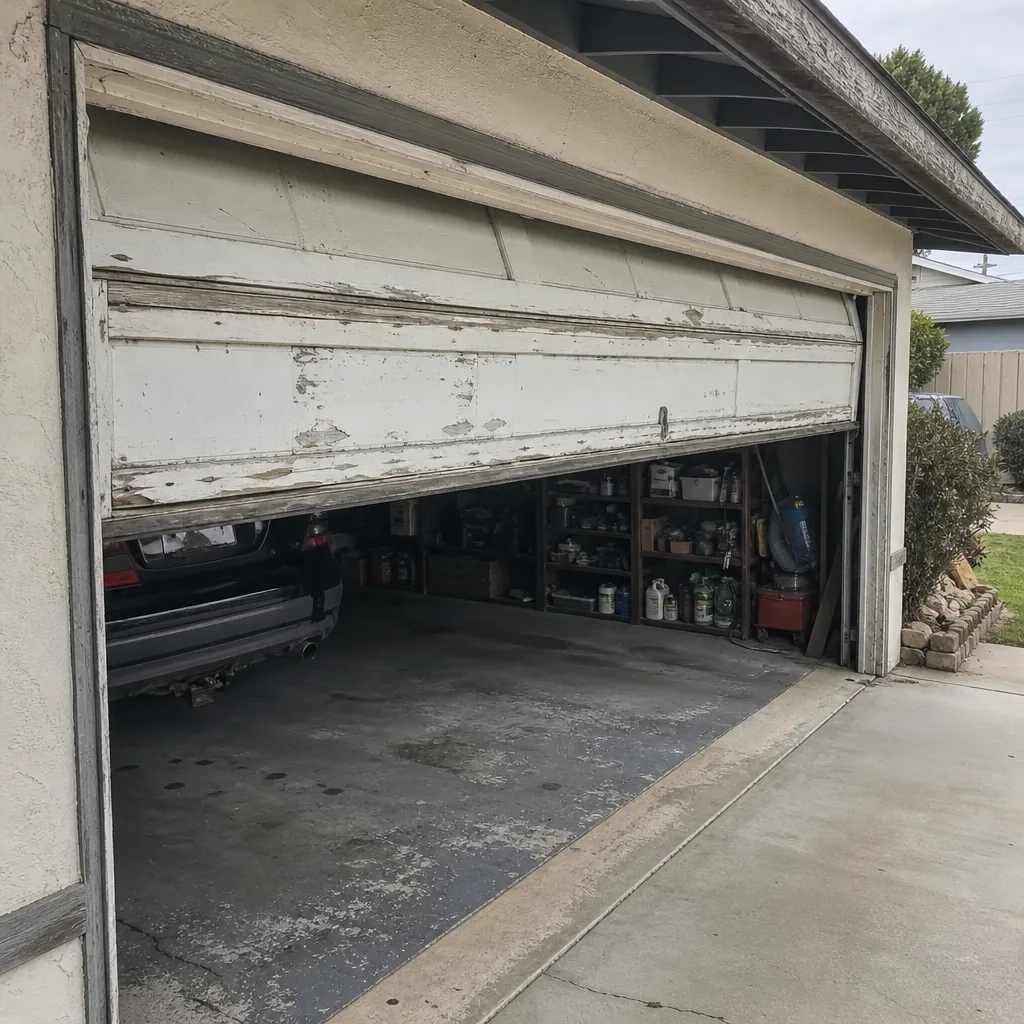 Before
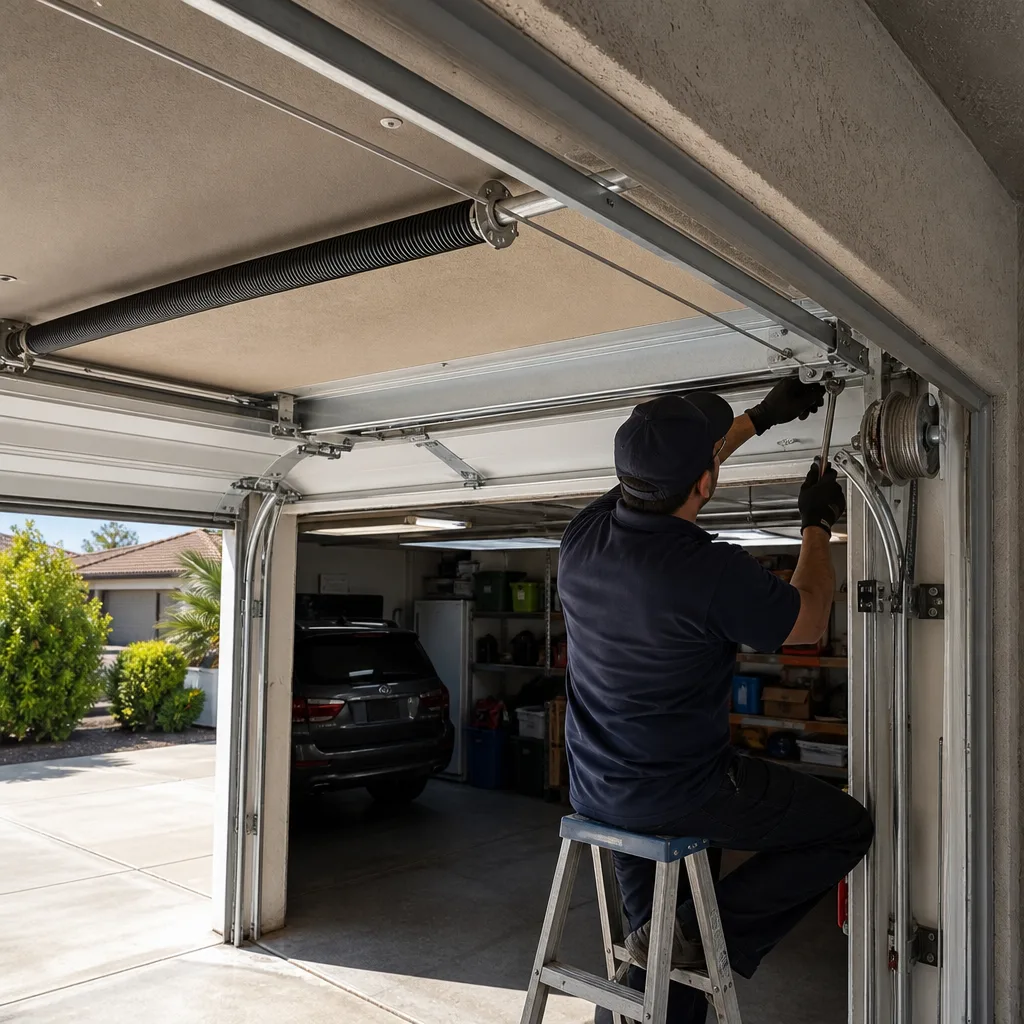 After
AfterHow Fernbrook Handles Riverside Homes
We named this guide after warning signs, but it’s worth saying what happens when you act on one. When you call Fernbrook Garage Doors Riverside, a live person answers, 24 hours a day. You’ll describe what you’re seeing or hearing, and we’ll give you an honest read. If a visit is needed, a background-checked, uniformed technician arrives with a written price prepared before any work begins. Shoe covers go on at the front door. Drop cloths go down inside the garage. Tools stay quiet when the kids are asleep. If there’s a dog crate near the work area, we ask before moving anything. Technicians are trained on eight major brands including LiftMaster, Chamberlain, Genie, Clopay, Amarr, Wayne Dalton, Craftsman, and Raynor. Every job ends with a photo of the clean-up before we leave. It’s the C.A.R.E. values, spelled out: Clean up like it’s our own home. Ask before moving or touching anything. Respect the family’s time and quiet hours. Explain the price before the work. And every job is covered by the 365-Day Done Right Promise. If it’s not done right, we make it right. No negotiation required. If you’re considering a new door rather than another repair, our guide on Garage Door Installation in Riverside covers what to expect.
The Bottom Line
Most garage door failures in Riverside announce themselves weeks ahead through sound, movement, and appearance. A clicking torsion spring, a door that drops during a manual lift test, cables that show rust or fraying from six feet away, sensors that trigger intermittent reversals, and rust blooming along a bottom panel are all early warnings. Ten minutes a month will catch nearly all of them. When you find one, the decision is simple: address it while it’s a small fix or wait until it’s a bigger one. For more guides & resources, visit our blog. If you’re not sure which category you’re in, call (559) 254-0605. A live person will answer, listen to what you’re describing, and help you decide with no pressure and no charge.
Written by Jesse Calder, Owner at Fernbrook Garage Doors Riverside, serving Riverside since 2002.