
Last updated October 17, 2026
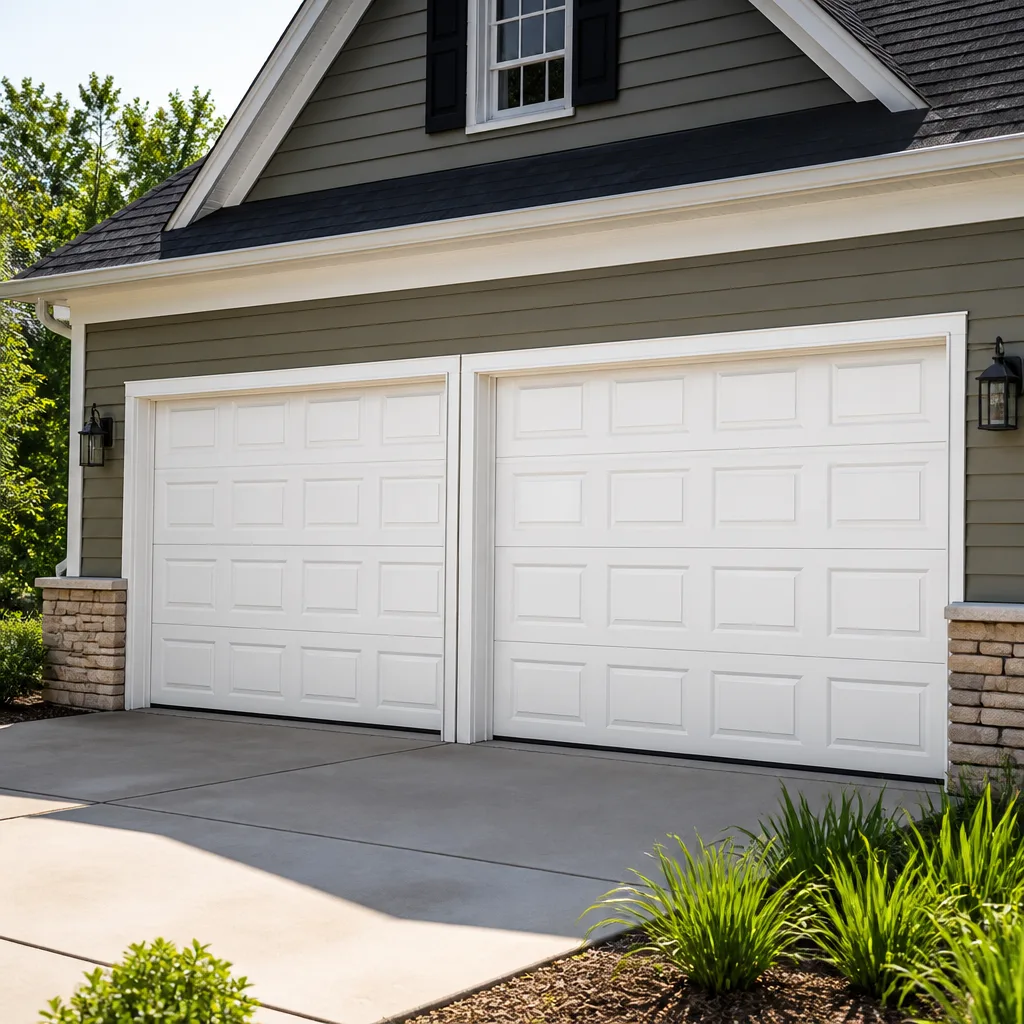 Raised-panel steel
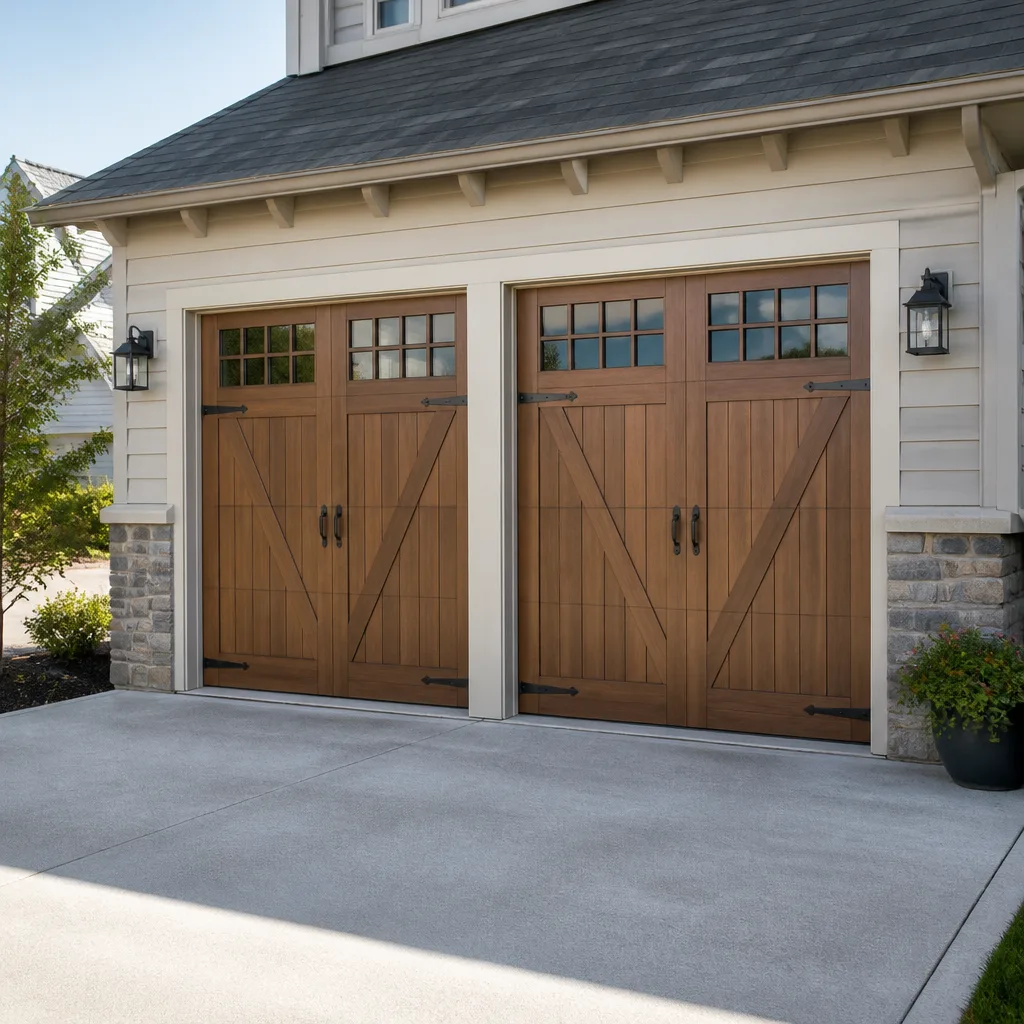 Carriage house
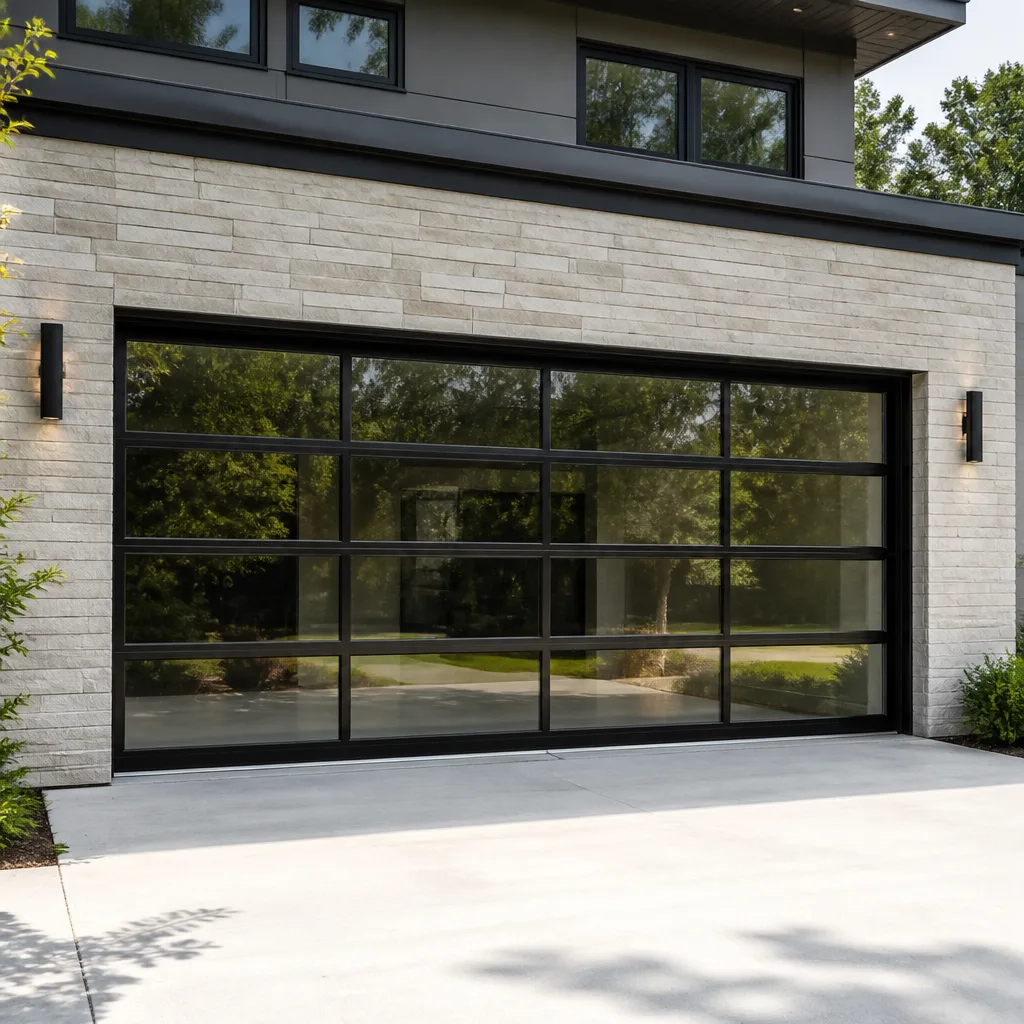 Full-view glass
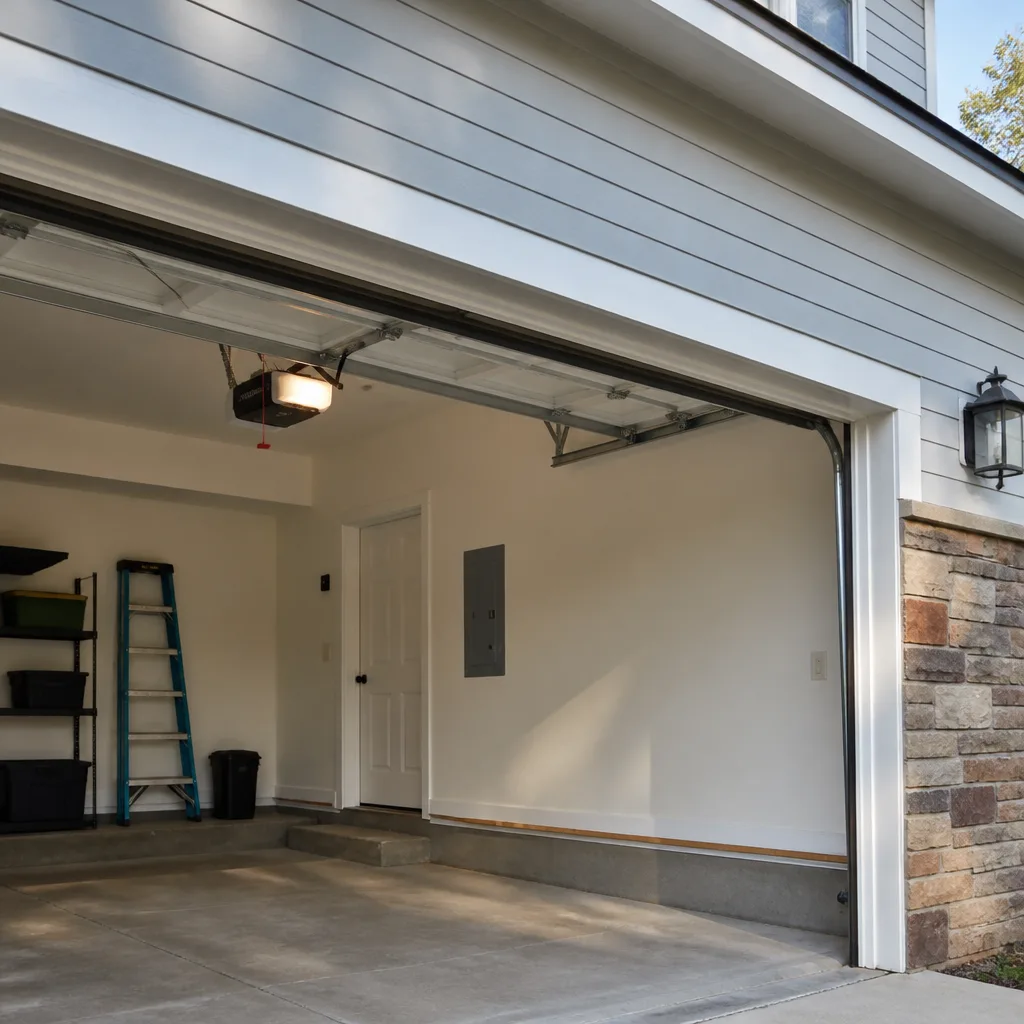 LiftMaster openers
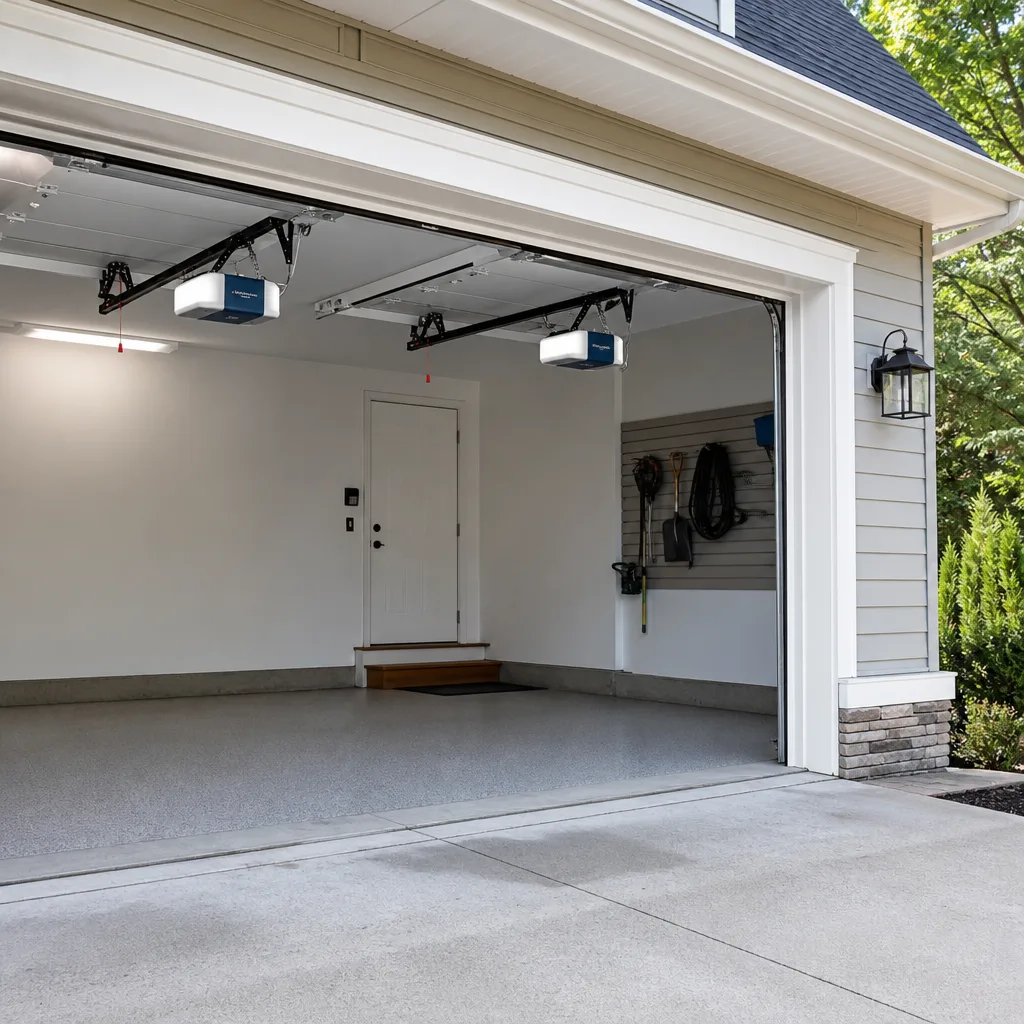 Chamberlain openers
Full 25-point door and opener safety check with every visit - springs, cables, rollers, tracks, and your LiftMaster or Chamberlain opener included
You get a price before we start. It does not change when the truck arrives.
Get your free estimateGarage Door Repair Maintenance Checklist for Riverside Homeowners
A torsion spring failure costs $180 – $320 to repair in Riverside. The labor to re-align a track warped by years of ignored tension costs about the same. Both are almost entirely predictable with a flashlight and ten minutes twice a year. Most Riverside homeowners swap their HVAC filters on a schedule, check their smoke detectors, and flush their water heaters. But the garage door, the single largest moving object in the home, gets ignored until the day it stops moving, starts grinding, or comes off its track. This checklist changes that habit. It gives you a simple seasonal routine that catches the two expensive failures before they happen, and it’s organized so you can complete it without a single tool.
Styles & brands we work with
Quick Answer
A garage door maintenance checklist for Riverside homeowners means checking the door twice a year, in spring and fall, using three senses: eyes, ears, and touch. Look at the tracks, cables, springs, and bottom seal. Listen for grinding, squealing, or rattling during operation. Touch only the door panel and the opener remote, never the cables or springs. This 20-minute routine catches spring fatigue and track misalignment early, and most of it requires nothing more than a flashlight.
Table of Contents
- Why Riverside’s Climate Demands a Specific Maintenance Routine
- Eyes Only: The Visual Checks You Can Do Without Touching Anything
- Ears Only: What Your Garage Door Should and Shouldn’t Sound Like
- The Touch Test: Safe Contact Points That Reveal Hidden Problems
- Cable Tension: How to Check It Without Touching It
- The Riverside Bottom Seal Check That Matters Most in Summer
- When to Log a Finding and Why It Helps Before a Home Sale
- Common Mistakes to Avoid
- When to Call a Professional
- Frequently Asked Questions
- The Bottom Line
Why Riverside’s Climate Demands a Specific Maintenance Routine
The Inland Empire, and Riverside specifically, is not easy on garage door hardware. We get triple-digit summer days that bake metal tracks and expand them. We get Santa Ana winds that drive fine, abrasive dust into every roller, hinge, and bearing surface. And we get dry air with almost no moisture to flush that grit away. Add to that the region’s dramatic temperature swings, a 40-degree drop between a July afternoon and a July night, and you have a recipe for micro-fatigue in steel components that coastal homeowners simply don’t face.
In our experience, a garage door in Riverside’s Wood Streets or Canyon Crest neighborhoods that goes unmaintained for three years will show measurable wear on its rollers and hinges by year two and a tired spring by year three. The same door in a coastal climate might run quietly for five years with zero attention. The desert-adjacent environment here isn’t a reason to panic, but it is a reason to be deliberate about maintenance twice a year, and the specific checks that follow are built around what Riverside’s air does to a door, not generic advice that gets recycled from homeowner blogs in Ohio.
If you’re already researching because something doesn’t sound right, our Garage Door Repair in Riverside page explains what different noises mean and what the fix typically costs.
Eyes Only: The Visual Checks You Can Do Without Touching Anything
The safest maintenance is the kind where your hands never leave your pockets. A garage door under tension stores enough energy to break a finger or worse, so we’re going to structure the visual inspection around what you can see from a safe distance and what you can only assess by looking, never touching.
- Track alignment. Stand inside the garage and look down the length of each vertical track. It should run perfectly straight from floor to the curve at the top. Look for any gap between the track and the wall brackets, any visible bowing, or any point where the track widens. A track that’s even a quarter-inch off will wear rollers unevenly and eventually cause the door to bind.
- Roller condition. With the door closed, shine a flashlight on each roller where it meets the track. Nylon rollers should look white or cream-colored without flat spots. Steel rollers should look round and sit fully inside the track. If a roller looks cracked, chipped, or if you can see the bearing inside, that roller is done.
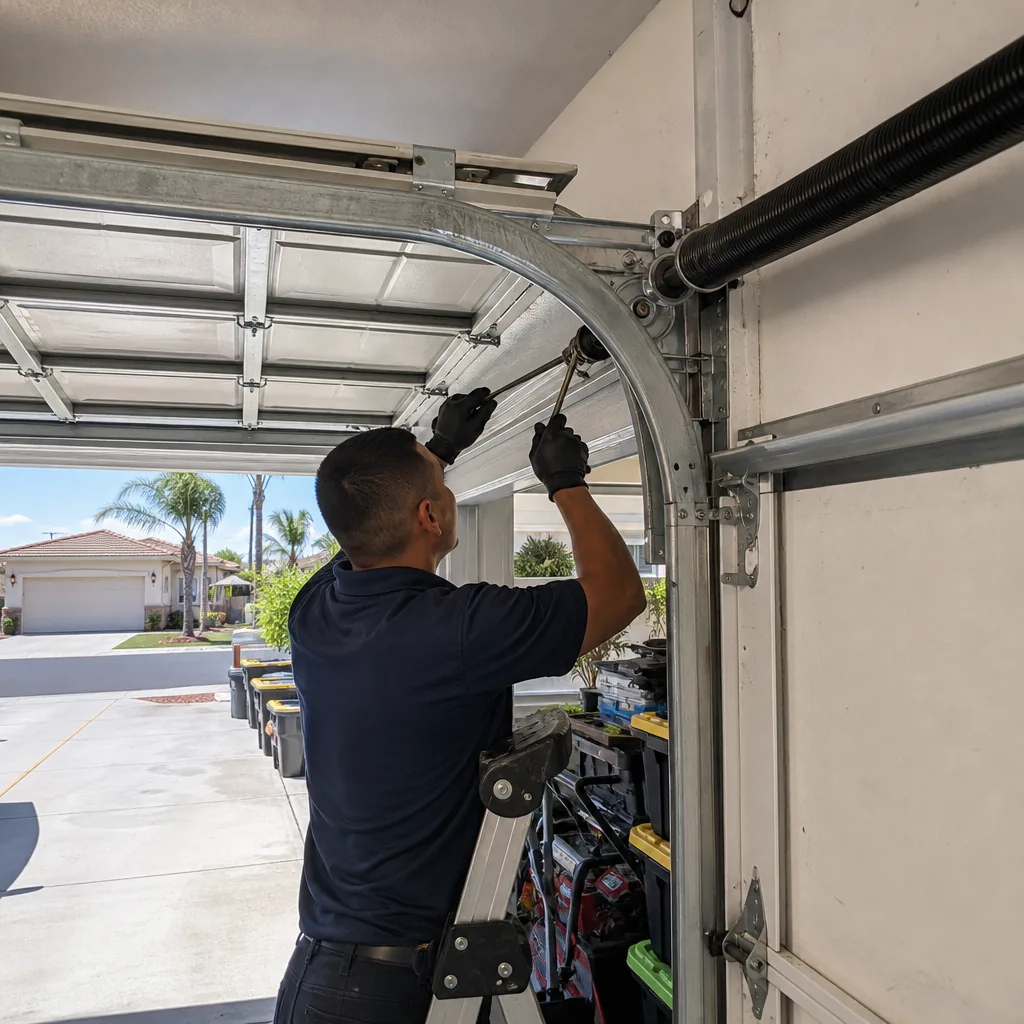
- Spring symmetry. With the door closed, look at the torsion spring above the center of the door opening. The coils should look evenly spaced across the full length. On a two-spring system, both springs should look identical. If one spring has a visible gap in the coils, or if the coils look compressed on one side, that spring has already begun to fail and needs professional attention.
- Cable condition. Look at the lift cables that run alongside the track on each side. They should be taut and free of fraying. A cable with loose strands, rust blooms, or a kink is a red flag, and the fix is not a DIY project. More on this shortly.
- Mounting hardware. Check the bolts, nuts, and brackets that hold the tracks to the wall and ceiling. Look for rust stains running down from any bracket, which indicates moisture has compromised the paint and likely the metal underneath.
This visual pass takes about four minutes. In Riverside’s older neighborhoods, like the homes near Magnolia Center or the classic builds in Arlington Heights, we regularly see brackets that have loosened just enough over decades of thermal cycling to create a subtle wobble that accelerates roller wear. Catching a loose bracket early is a $20 fix. Ignoring it becomes a track replacement.
Ears Only: What Your Garage Door Should and Shouldn’t Sound Like
A healthy garage door is not silent, but it is predictable. It sounds like a low, even rumble as the panel moves along the tracks, a brief mechanical click as the opener engages, and a soft thump when the door settles into the closed position. In our work across Riverside, from Mission Grove to La Sierra, we’ve learned that the sounds a door makes in this climate tell you more than the sounds any other home system makes, because dry air changes the way failing hardware announces itself.
Here’s what to listen for, and what each sound means:
- A high-pitched squeal or shriek. This is metal-on-metal contact, almost always from dry rollers or hinges. In Riverside’s low humidity, factory lubrication dries out faster than you’d expect. Hinges that squeal are telling you they’re binding, and every bind puts extra load on the spring.
- A rhythmic grinding or scraping. This usually means a roller has seized and is now dragging flat against the track instead of rolling. A seized roller on one side creates asymmetric tension, which is exactly how tracks get warped.
- A metallic popping sound when the door passes the halfway point. In our experience, this often traces to a loose hinge plate or a roller that’s briefly leaving the track. It’s intermittent, easy to ignore, and it gets worse.
- A rattling vibration throughout the whole door. This is commonly a loose opener chain, a loose bracket, or a panel joint that has separated. None of these are dangerous on their own, but all of them amplify wear on everything else.
- Clanking or banging at the very start of the cycle. The spring and cable system should load smoothly. A bang at the start means the door is catching, then releasing, and that’s the kind of shock loading that shortens a spring’s life by years.
Do this listening test twice a year, once with the door opening and once with it closing, standing outside the garage with the door to the house closed so you’re hearing only the door. If you hear any of these sounds, note them. Several of the brands we work on most in Riverside, including Amarr and Wayne Dalton doors, have specific wear patterns that produce these telltale sounds earlier than others, particularly on homes built in the 1990s and 2000s when these models were widely installed.
The Touch Test: Safe Contact Points That Reveal Hidden Problems
Now we get to the part that requires a little physical contact, but nothing that puts you near dangerous tension. Everything in this section is safe to touch because none of it stores energy.
- Test the door’s balance at the halfway point. Pull the red emergency release handle with the door closed, then manually lift the door to about waist height, around 3 to 4 feet, and let go. A properly balanced door will stay right where you leave it. If it drifts upward, the spring is over-tensioned. If it drops or slams down, the spring is either fatigued or broken and is not carrying its share of the door’s weight. This is the single most important test in this whole guide and it takes 15 seconds.
- Check the auto-reverse sensor. With the door open, place a roll of paper towels or a 2×4 flat on the ground in the path of the door, then use the remote to close it. The door should reverse within two seconds of contacting the object. If it doesn’t, the force setting on the opener needs adjustment. This is a safety feature, not a convenience, and in homes with kids, it’s non-negotiable.
- Feel the bottom edge of the door panel. Run your hand along the bottom rubber seal from one side to the other. It should feel pliable and uniform. If you feel cracks, flat spots, or gaps where the seal has separated from the panel, that’s a replacement. In Riverside, the bottom seal takes a beating from summer heat, and a failed seal invites dust, insects, and rodents into the garage, along with cooled air leaving.
- Inspect the panel joints. Run your hand over the horizontal seams where each panel meets the next. If you feel any unevenness, or if the door visibly sags in the middle when it’s halfway open, a panel strut may need reinforcement or a hinge may be worn. This is especially common on wide double-car doors, which carry more panel flex than single doors.
- Check the weatherstripping on the sides. The vinyl strips that run along the outside of the track should meet the door snugly but not bind it. In Riverside’s hot sun, this vinyl gets brittle. Press on it gently, it should flex, not crack.
This touch test, combined with the eyes-only pass, takes under ten minutes. If you do nothing else, do the balance test. It tells you more about the health of your spring than any visual inspection ever will.
Cable Tension: How to Check It Without Touching It
We need to say this clearly: the lift cables on a garage door are dangerous to touch. They run through pulleys, they carry the full weight of the door, and they are under tension at all times. If a cable snaps while you’re near it, the force can cut through a glove, a sleeve, or worse.
So here’s how you check cable tension without ever touching a cable.
- Look at both cables while the door is closed. They should both look equally tight. A slack cable on one side means the door is sitting off-level or a spring is failing.
- Look at the cables while the door is halfway open. With the door in the balanced position from the touch test, both cables should still be tight. A loose cable at the halfway point is a serious warning sign.
- Check where the cable meets the drum at the top. The cable should wrap evenly around the drum, with each winding sitting neatly next to the previous one. If the wraps overlap, the cable is binding and will wear through.
- Look for frays at the bottom bracket. This is where cables most often fail. Use a flashlight and look for loose strands, a reduced diameter compared to the rest of the cable, or rust right where the cable attaches to the bottom of the door.
If you find any cable abnormality, close the door if it’s open, leave it alone, and call us at (559) 254-0605. Do not operate the door further. A frayed cable can snap without warning, and when it does, the door can fall faster than the opener can compensate. We’ve seen doors drop into cars, onto tool chests, and once into a wall in a home in Riverside’s Orangecrest neighborhood because a homeowner tried to “just get one more day out of it.” It’s never worth it.
For a deeper look at how the cable and spring systems work together, our Garage Door Spring Repair in Riverside page explains the mechanics and shows typical local pricing.
The Riverside Bottom Seal Check That Matters Most in Summer
The rubber strip along the bottom edge of your garage door is called the bottom seal or astragal, and it does three jobs in a Riverside home. It keeps dust and debris out when the Santa Anas kick up. It keeps cooled air in during the four months when your garage becomes a hotbox. And it keeps pests, black widows, field mice, and the occasional scorpion in the hillside neighborhoods, from finding their way under the door.
Here’s the specific check:
- Look for daylight. Close the door, then go inside and look at the bottom edge. If you see any sliver of daylight between the seal and the concrete, air, dust, and small pests are coming through that gap.
- Press on the seal. It should feel like a firm rubber gasket. If it feels hard like plastic, the heat has done its work and the seal won’t compress to fill small irregularities in your driveway anymore.
- Check the ends. The seal often pulls away from the panel at the far corners first. Grab each end and give it a gentle tug sideways. If it moves more than a half-inch, it’s failing.
- Look at the threshold itself. The concrete slab under the door should be level. Many Riverside homes sit on slab foundations that shift slightly with moisture changes in the soil, and a slab that has developed a small crack or a high spot will defeat even a new seal. This is common in the La Sierra and Arlington areas, where soil composition varies more than homeowners expect.
A bottom seal replacement is one of the cheapest fixes on a garage door, typically $75 to $130 parts and labor, and it makes a measurable difference in your garage’s temperature during Riverside’s hottest months. If you’re also considering whether an older door is worth maintaining, our Garage Door Installation in Riverside page walks through the decision between a seal refresh and a full replacement.
When to Log a Finding and Why It Helps Before a Home Sale
During a maintenance check, you’ll sometimes find something that isn’t a problem today but will be in six months. A roller with a developing flat spot. A spring that passes the balance test but has visible coil spacing on one end. A bracket that looks too close to the point where it should be replaced. These findings are worth writing down.
Here’s why: in Riverside’s 2025 real estate market, buyers are doing more sophisticated inspections than ever. A garage door that gets documented maintenance with dates and notes signals a home that has been cared for, not just lived in. And if you’re selling a home, say in Canyon Crest or Hawarden Hills, where buyers expect a certain standard, a dated maintenance log that shows two checks a year, with the spring, cables, and seal all noted, is a small but real selling point. It says something about how the house has been treated.
Keep a simple note on your phone. Date, what you checked, what you found. If you found nothing, write “all clear.” Two entries a year. In ten years, you’ll have a complete service history for the door, and before a listing in a competitive Riverside market, that history has real value.
And if a maintenance finding does require a pro, a written quote before any work starts should be a non-negotiable. That’s exactly how we operate at Fernbrook, so when you call, you’ll get a price in writing before we touch a thing.
Common Mistakes to Avoid
- Lubricating everything with WD-40. WD-40 is a solvent, not a lubricant. It strips whatever grease was there and leaves the metal dry within weeks. Use a silicone or lithium spray made for garage door rollers and hinges, and never spray the tracks. The tracks should stay dry so the rollers roll, not slide.
- Oiling a torsion spring yourself. The spring does not need lubrication to function, and the safe way to coat it requires being close to the most dangerous component on the door. A thin film of spray lubricant on a torsion spring can be applied safely by a technician, but we don’t recommend homeowners do it. If the spring’s coils look dry or corroded, you don’t need to oil it, you need it inspected.
- Ignoring a small balance issue because the door “still opens.” A door that’s slightly heavy on one side still opens, right up until the day it doesn’t. That day is usually when a spring gives out or a cable snaps, and the repair bill is triple what fixing the balance issue would have been.
- Testing the auto-reverse with an expensive object. Use a roll of paper towels, a piece of scrap wood, or a sturdy cardboard box. Never use your hand, a child’s toy, or anything you care about. The sensor should reverse the door, but you test it with something expendable.
- Using the garage door as the primary entrance. Every time the door cycles, you’re using spring life. Riverside homes with attached garages often see 4 to 6 cycles a day, and that’s fine. But households that use the garage door as the front door put 10 to 12 cycles a day on the spring. It adds up. If you’re walking the dog, taking out the trash, or checking the mail, use the side door. Your spring will thank you in years of extra service.
- Putting off a spring replacement when one side has already broken. If you have a two-spring system and one spring breaks, the other one is not far behind. They were installed together, they’ve cycled the same number of times, and the intact spring is now carrying double its rated load. Replace both. It’s the standard practice among reputable companies, and it’s the only approach that restores the door to proper balance.
When to Call a Professional
You should call a professional for Garage Door Repair services when the balance test shows the door drifting more than an inch in either direction, when you hear grinding that doesn’t resolve after cleaning the tracks, when a cable shows any fraying or slack, when a spring’s coils look uneven, or when the door has come off its track, even partially. These are not projects where a YouTube video and a wrench make things better. They are projects where the door stores enough energy to cause genuine injury, and the professionals own the specific tools and muscle memory to release that energy safely.
Fernbrook Garage Doors Riverside offers free estimates in Riverside, a written price before any work starts, and technicians who are background-checked and uniformed on every visit. Call (559) 254-0605 and a live person will answer, day or night, no voicemail tree.
Frequently Asked Questions
Twice a year, once in spring and once in late fall, is the right cadence for Riverside’s climate. The spring check catches issues from winter temperature swings, and the fall check prepares the door for the hot, dusty summer months when hardware wears fastest. Each check takes 15 to 20 minutes.
Yes. The eyes-only and ears-only sections require only a flashlight. The touch test requires your hands and a roll of paper towels for the auto-reverse check. The balance test requires pulling the red emergency release handle and lifting the door, no tools needed. If you find something that needs fixing, that’s when tools come out, and at that point we’d recommend a professional with the right ones.
Riverside’s low humidity dries out the lubricant on rollers, hinges, and bearings faster than in coastal climates. When the lubrication goes, metal contacts metal directly, and the sound gets louder. Once the noise starts, lubrication alone usually won’t fix it, the metal surfaces have often started to wear, and the parts may need replacement. That’s why the ears-only check matters before the summer heat arrives.
A DIY maintenance check costs nothing but time. If you’re hiring a professional for a full tune-up, expect to pay $90 to $190 in the Riverside market depending on the door size, brand, and what’s included. If the tune-up reveals worn parts, costs go up from there. Rollers typically run $15 to $35 per roller installed, a bottom seal $75 to $130, and a spring replacement $180 to $320 for a standard torsion spring. Call (559) 254-0605 for an exact quote, estimates are free.
No. At Fernbrook Garage Doors Riverside, the price is quoted in writing before any work begins, and that’s the price you pay. The quote accounts for the door’s condition at the time of service, and if we find something additional during the repair, we stop and show you a new written quote before doing anything more.
Yes. Our technicians carry the most commonly needed parts for the eight major brands we’re trained on, including LiftMaster, Chamberlain, Genie, Clopay, Amarr, Wayne Dalton, Craftsman, and Raynor. Most repairs are completed on the first visit. When a specific part needs to be ordered, we’ll tell you the timeline and cost up front.
The Bottom Line
A garage door is the largest moving part in your home, and in Riverside’s heat, dust, and dry air, it wears faster than the same door would elsewhere. Twice a year, take 20 minutes. Open the door, stand inside, and look at the tracks, cables, springs, and seal. Run the door and listen for squealing, grinding, or popping. Test the balance. Check the auto-reverse. Feel the bottom seal. Write down what you find. Most findings will be nothing, and that’s good. When it’s not nothing, you’ve caught it early, and the fix is measured in hundreds of dollars instead of the damage an unplanned failure causes. For everything else, Fernbrook Garage Doors Riverside is a phone call away, and our more guides & resources are here to help between checks. We’ll give you a written price before any work starts, cover your floors with shoe covers and drop cloths, and send a background-checked, uniformed technician who treats your home like his own. Call (559) 254-0605 for a free estimate.
Written by Jesse Calder, Owner at Fernbrook Garage Doors Riverside, serving Riverside since 2002.
See the difference
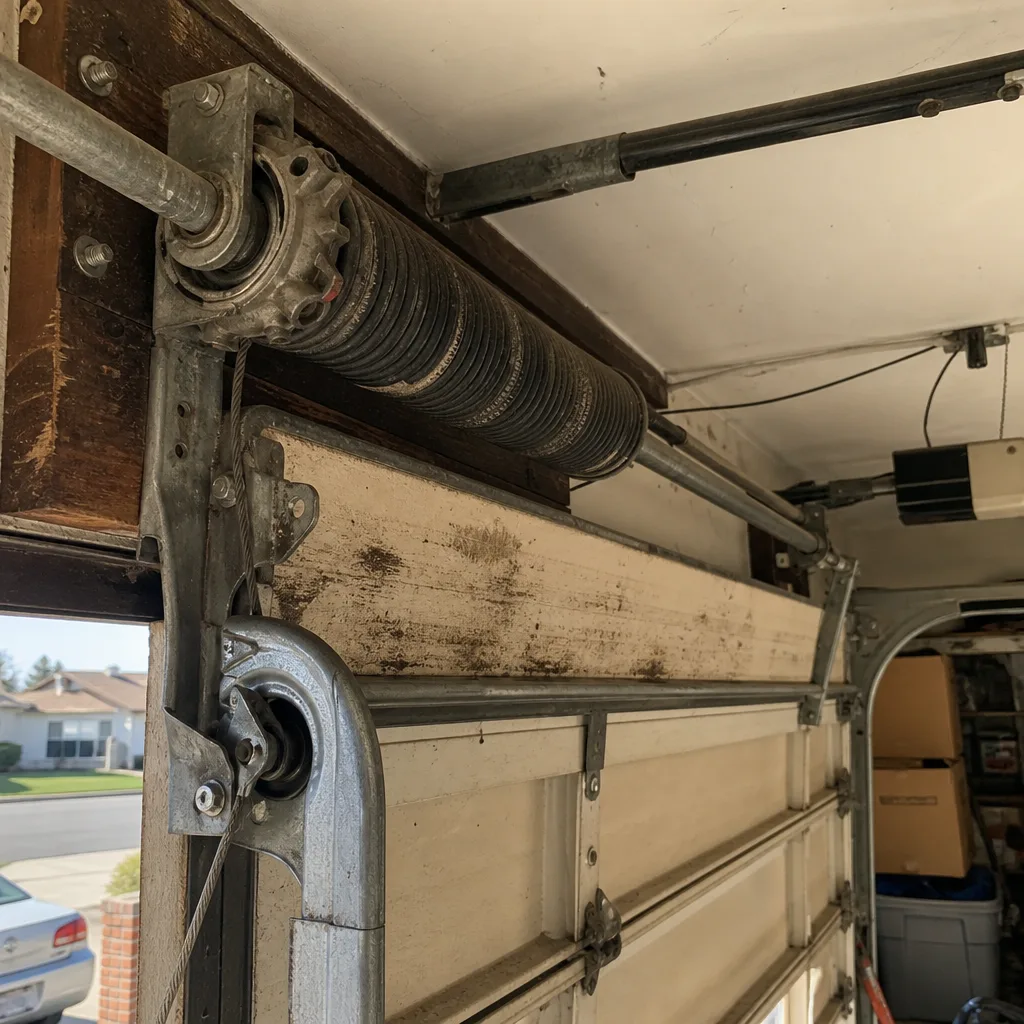 Before
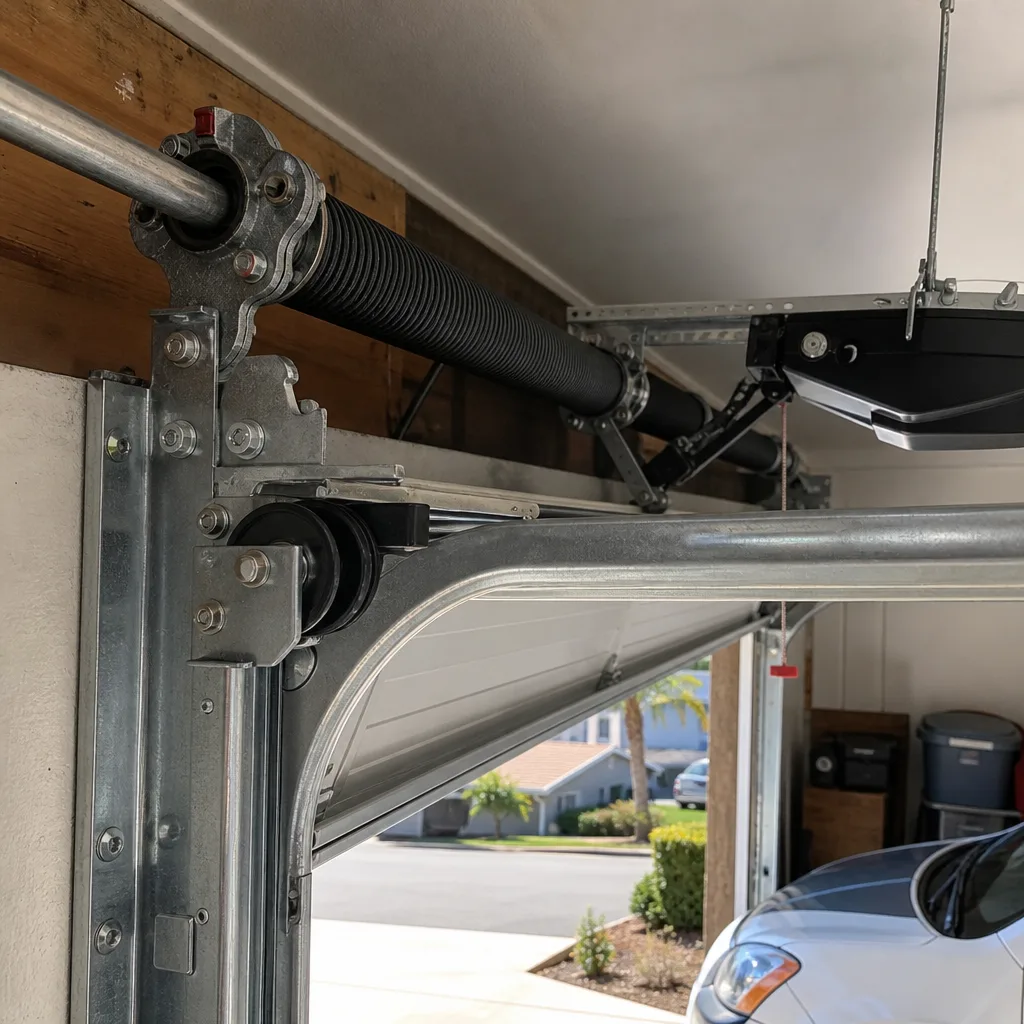 After
After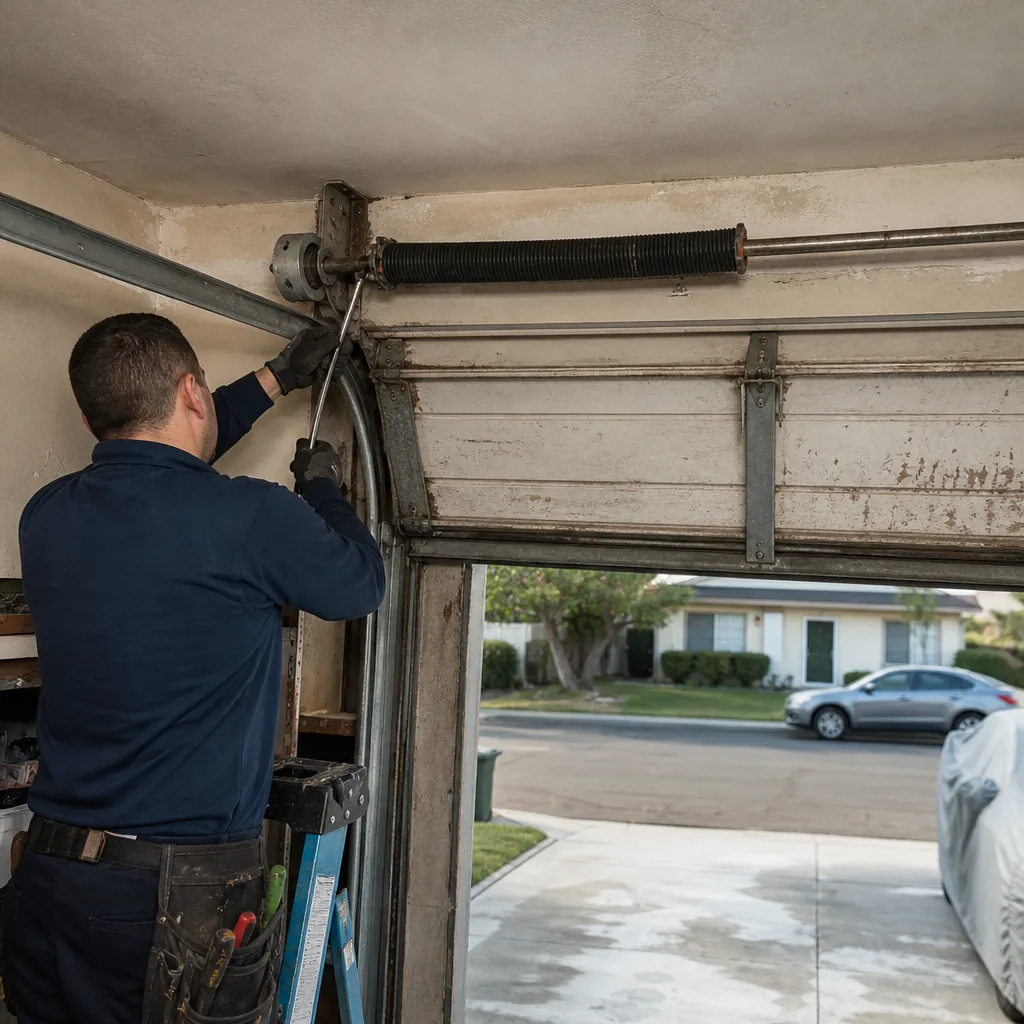 Before
 After
After Before
 After
After